SlimSet Official Website › Blog › Green Tea Extract And The Liver
Green Tea Extract And The Liver: Who Should Pause First
Two of the five ingredients on this panel carry a published liver-injury literature. The events are rare, the amounts here sit at the low end of the reported range, and anybody stacking several supplements at once should still read this before the first capsule.
- Green tea as a drink and green tea extract in a capsule are not the same exposure, and the safety reviews separate them.
- The US Pharmacopeia published a comprehensive review of hepatotoxicity associated with green tea extracts.
- One genetic variant, HLA-B*35:01, has been linked to green tea-associated liver injury.
- Garcinia cambogia carries its own case-report literature, including acute liver failure.
- This panel carries 58.5 mg of EGCG and 65 mg of hydroxycitric acid, both at the low end of the reported range.
Why an article like this exists
A shop publishing a safety article about the product on its own shelves looks like a contradiction until you consider the alternative, which is that somebody reads it somewhere else after buying.
The events described below are rare. Millions of people take green tea extract every year without incident, and the base rate for the reported injuries is unknown precisely because they are uncommon enough that nobody has been able to measure it properly.
Rare is not the same as irrelevant. The people for whom this matters can be identified in advance in a couple of sentences, and identifying them costs nothing.
Tea in a cup and extract in a capsule
The distinction the safety literature insists on is between the beverage and the concentrate, and it is not a technicality.
A cup of green tea delivers catechins diluted in a large volume of water, drunk over minutes, usually alongside or after food. A capsule delivers a concentrated extract as a single bolus, often on an empty stomach because that is what the label asks for.
That second point is worth sitting with, because it is a consequence of an instruction that exists for a reasonable purpose. Taking catechins fasted raises how much of them reaches the bloodstream from the same number of milligrams. The instruction is not a mistake; it simply means the exposure is higher than the milligram figure alone suggests.
What the pharmacopeia review found
The United States Pharmacopeia published a comprehensive review of the hepatotoxicity of green tea extracts, assembling the case reports and the mechanistic work into one assessment. It is the single most useful document in this area for anybody who is not a hepatologist.
Its broad findings are consistent with the rest of the literature. Reported injuries cluster around concentrated extracts rather than the beverage, around higher exposures, and around people taking several products at once. Most reported cases resolved after the product was stopped.
The AASLD practice guidance on drug, herbal and dietary supplement-induced liver injury is the companion reference, and it is the document a clinician would reach for if somebody arrived with the symptoms listed further down this page.
| What raises the exposure | Why it matters | What it means in practice |
|---|---|---|
| Several green tea products at once | catechin exposure adds up across everything taken in a day | count every supplement carrying green tea, not just this one |
| High-dose extracts | the reported injuries cluster at exposures well above this row | a 58.5 mg EGCG row sits at the low end of the range |
| Taking it fasted | absorption of catechins is higher without food | a before-meal instruction raises exposure from the same milligrams |
| An individual susceptibility | one genetic variant has been linked to injury | unpredictable in advance, which is why the symptom list matters |
These are exposure factors from the published reviews. None of them describes a likelihood for any individual, and the reported events are rare.
Who turns out to be susceptible
The most interesting development in this area is that susceptibility has begun to be identified rather than merely assumed.
A 2021 study in Hepatology reported an association between the HLA-B*35:01 allele and green tea-induced liver injury. That is a step towards explaining why an exposure most people tolerate without difficulty affects a small number of people badly. A 2023 study looked at catechol-O-methyltransferase and UGT1A4 genotypes in people taking high-dose green tea extract.
Nobody is genotyped before buying a supplement, so this work does not yet change what happens at the point of purchase. What it does change is the framing: the risk is concentrated in a minority who cannot currently be identified in advance, which is exactly why knowing the symptoms is worth two minutes.
Read the SlimSet panel before the first capsule, not after
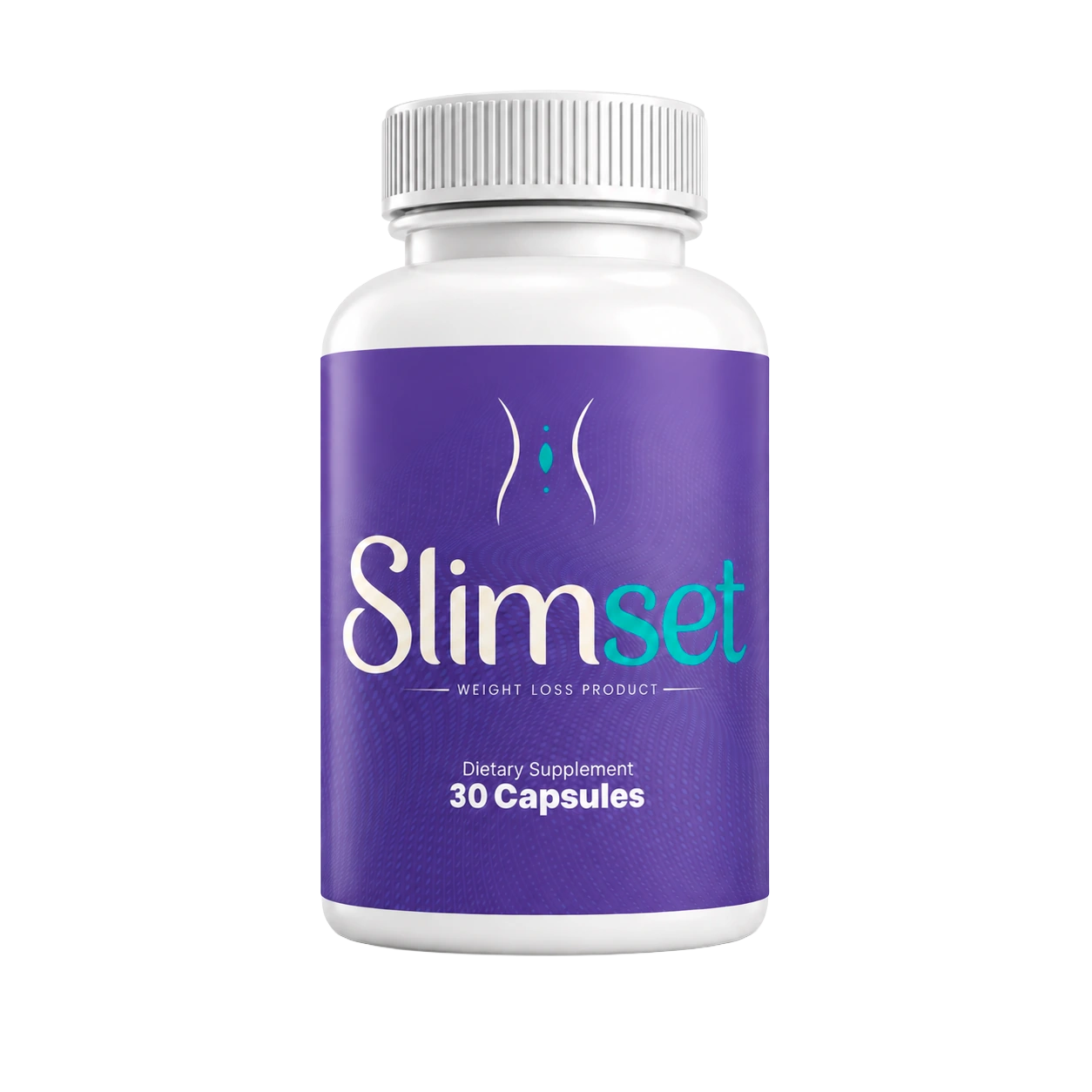
Five rows, every milligram printed, 58.5 mg of EGCG among them. One capsule a day and 60 days from purchase to change your mind.
One bottle $89 · six bottles $294 · 60-day money-back guarantee
Order SlimSet On The Official WebsiteOne capsule a day · 30 per bottle · lot SLI-26/GE-8193
The second row with a case literature
Green tea extract is not the only row on this panel with a published safety file. Garcinia cambogia has one of its own, and for an ingredient of its popularity it is unusual.
Published case reports describe hepatotoxicity associated with garcinia cambogia and acute liver failure following its use. Others in the same literature describe acute hepatitis and, in one instance, liver failure requiring transplantation.
Case reports establish that something has happened, not how often it happens. The rate is unknown and is very probably low. But two rows on one panel each carrying a case literature is a fact about this formula, and it belongs on the website selling it rather than only in the journals.
What the amounts here actually are
Proportion matters, and this is where the panel reads better than the paragraphs above might suggest.
- Green tea extract 130 mg at 45% EGCG supplies 58.5 mg of EGCG. The reported injuries cluster at exposures several times higher.
- Garcinia extract 130 mg at 50% HCA supplies 65 mg of hydroxycitric acid, against the 1,500 mg a day used in the trial literature.
- One capsule a day is the whole label instruction, and the label says not to exceed it.
- Both rows are fully declared, so anybody can take this page to a clinician and point at the exact numbers.
The same arithmetic that makes these rows look under-dosed against their efficacy trials also places them at the low end of the exposures in the safety literature. Those two statements are the same fact read from two directions, and an honest page prints both.
The stacking problem
The single most useful thing in this article is not about this bottle. It is that catechin exposure adds up across everything somebody takes in a day.
Green tea extract appears in metabolism formulas, in pre-workout powders, in multivitamins marketed for energy, and in products sold for skin and for general antioxidant support. Somebody taking four supplements can be receiving green tea extract from three of them without having decided to take it at all.
The remedy takes ten minutes. Lay out every bottle, read every panel, and add up the green tea rows. If the total is a long way above what any one product carries, that is worth knowing, and it is not something any single label can tell you.
- Collect every supplement bottle in the house and read the panels rather than the fronts.
- Add up every row containing green tea extract, and note the EGCG percentages.
- Do the same for garcinia cambogia, which appears across the same category.
- If you take a prescription medicine, bring the list to whoever prescribes it and ask the question once, properly.
- Keep the bottles rather than decanting the capsules, so the lot numbers stay with them.
What to watch for, and what to do
The symptoms of liver injury are unglamorous and easy to attribute to something else, which is the reason they are worth reading once in advance.
| Sign | What it can look like | What to do |
|---|---|---|
| Yellowing of the skin or the whites of the eyes | jaundice, often noticed by somebody else | stop the capsule and get medical attention the same day |
| Unusually dark urine | the colour of strong tea, without dehydration explaining it | stop the capsule and arrange to be seen |
| Persistent nausea or loss of appetite | several days rather than one bad morning | stop the capsule and mention the supplement by name |
| Unexplained tiredness with abdominal discomfort | upper right side, dull rather than sharp | stop the capsule and arrange to be seen |
Bring the bottle to the appointment. A clinician needs the panel, and the lot number on the label is the fastest way to establish what was taken.
Two practical points sit behind that table. Stop the capsule first: most reported cases in the literature resolved after the product was discontinued, and stopping costs nothing while the question is answered. And name the supplement explicitly at the appointment, because a history that includes it is a completely different consultation from one that does not.
The lot number on this bottle is SLI-26/GE-8193, and the batch verification page explains what that reference does and does not establish. The side effects page covers the caffeine interactions separately, and they are the ones far more people will meet.
A dietary supplement for healthy adults of 18 and over, not a medicine and not FDA-approved. The bottle prints no support claim at all, and its own caution rules out anyone pregnant or nursing, anyone under 18, and anyone with a known medical condition who has not raised it with a clinician first. This article does not change that ceiling in either direction.
References
- Oketch-Rabah HA, Roe AL, Rider CV, et al. United States Pharmacopeia (USP) comprehensive review of the hepatotoxicity of green tea extracts. Toxicol Rep. 2020;7:386-402. PMID 32140423. https://pubmed.ncbi.nlm.nih.gov/32140423/
- Hoofnagle JH, Bonkovsky HL, Phillips EJ, et al. HLA-B*35:01 and Green Tea-Induced Liver Injury. Hepatology. 2021;73(6):2484-2493. PMID 32892374. https://pubmed.ncbi.nlm.nih.gov/32892374/
- Acosta L, Byham-Gray L, Kurzer M, Samavat H. Hepatotoxicity with High-Dose Green Tea Extract: Effect of Catechol-O-Methyltransferase and Uridine 5'-Diphospho-glucuronosyltransferase 1A4 Genotypes. J Diet Suppl. 2023;20(6):850-869. PMID 36178169. https://pubmed.ncbi.nlm.nih.gov/36178169/
- Fontana RJ, Liou I, Reuben A, et al. AASLD practice guidance on drug, herbal, and dietary supplement-induced liver injury. Hepatology. 2023;77(3):1036-1065. PMID 35899384. https://pubmed.ncbi.nlm.nih.gov/35899384/
- Yousaf MN, Chaudhary FS, Hodanazari SM, Sittambalam CD. Hepatotoxicity associated with Garcinia cambogia: A case report. World J Hepatol. 2019;11(11):735-742. PMID 31772720. https://pubmed.ncbi.nlm.nih.gov/31772720/
- Corey R, Werner KT, Singer A, et al. Acute liver failure associated with Garcinia cambogia use. Ann Hepatol. 2016;15(1):123-6. PMID 26626648. https://pubmed.ncbi.nlm.nih.gov/26626648/