SlimSet Official Website › Choosing a supplement
Choosing a supplementChoosing A Metabolism Supplement: Seven Checks
Seven questions, each answerable from a label and a seller’s website in about five minutes. They test what a company is willing to tell you rather than whether a capsule works, because disclosure is the only thing a buyer can verify before paying. All seven are then run on the product this website sells.
A scorecard you can carry to any bottle, applied at the end to this one.
What a checklist like this can and cannot do
A disclosure test, not an efficacy test, and the difference matters.
No list of questions answered from a box can tell anybody whether a capsule will do what they want. That would need a trial of the finished product, and in this category those effectively do not exist. What a checklist can do is separate companies that print their numbers from companies that hide them.
That distinction is worth more than it sounds. A panel with an amount against every row can be checked against the published research by anybody with a browser. A proprietary blend cannot be checked by anyone, including the person selling it.
So the seven below are disclosure tests. Passing all seven makes a label honest, not effective. Failing several is a reason to put the bottle down.
- Decide what you are buying for. “Less afternoon snacking” and “a number on a scale” are different purchases with different odds.
- Count your current caffeine, from coffee, tea, cola and pre-workout, before adding a capsule to it.
- Write down where you are starting. A week of notes beats a memory every time.
The seven checks
Seven questions, in the order that settles a purchase fastest.
1. Is there an amount against every row?
A Supplement Facts panel may group ingredients into a proprietary blend and print one total. That is legal and it ends the conversation: nothing inside the blend can be compared with any published trial. A panel that prints a milligram figure against every active is a panel that can be argued with.
2. Can you work out the total caffeine?
Caffeine anhydrous is usually declared. Green tea extract, green coffee extract, guarana and yerba mate all carry caffeine of their own, and labels vary in whether they bound it. Add the declared row to whatever the botanical rows can contribute, then compare the result with what you already drink.
3. Does the amount match what the research used?
This is the check that costs most products their reputation. Look up the trial behind the ingredient, find the amount it used, and set it beside the label. A row at a few per cent of a trial amount is a garnish, whatever the marketing around it says.
4. Is a standardisation percentage printed?
“Green tea extract 130 mg” and “green tea extract 130 mg, 45% EGCG” are different disclosures. The second can be multiplied out to 58.5 mg of the compound the trials measured. The first cannot be compared with anything at all.
5. Is the species and the plant part named?
Coffea robusta seed, Garcinia cambogia fruit, Camellia sinensis leaf. Plants are not interchangeable between their parts, and a label that names both is telling you it knows what it bought. A bare common name is not enough to look anything up.
6. Is there a refund route with a human behind it?
Find the window in days, the telephone number, the return address and who pays the postage, before ordering rather than after. A guarantee with no phone number attached to it is a sentence, not a policy.
7. Does the box claim more than the law allows?
Supplements may say they support a structure or a function. They may not claim to treat a disease, and they may not promise a quantity of weight lost. A box that does either has told you how much of the rest to believe.
The same seven checks, run on this product
Scored in public, on the website that sells the bottle.
| Check | Result | What the label actually shows |
|---|---|---|
| 1. An amount against every row | Pass | Five actives, a milligram figure against each, no proprietary blend, 658 mg declared in total |
| 2. Total caffeine knowable | Partial | 138 mg of caffeine anhydrous is printed. The green tea row is bounded at under 3% caffeine. The green coffee row carries some and is not bounded, so a total cannot be finished |
| 3. Amounts match the research | Fail | One row of five sits inside its researched range. The other four supply a fraction of the amounts their trials used |
| 4. Standardisation printed | Pass | 50% chlorogenic acids, 50% HCA, and 98% polyphenols with 75% catechins and 45% EGCG |
| 5. Species and plant part named | Pass | Coffea robusta (seed), Garcinia cambogia (fruit), Camellia sinensis (leaf) |
| 6. Refund route with a human | Pass | 60 days from purchase, an order desk on +1 (302) 200-3480, and a published return address; return postage is the buyer’s |
| 7. Claims within the law | Partial | The bottle prints no support claim at all. The seller’s sales page does, and this website attributes those lines to the sales page every time it repeats them |
Four passes, two partials and one failure, every one of them checkable against the panel reproduced on the supplement facts page.
The check it fails, in full
Check three, set out in full rather than summarised away.
Check three is the one that matters most to anybody buying for an outcome, and this panel does not pass it. Four of the five rows are printed at 130 mg, and 130 mg is not a formulation decision so much as four ingredients rounded to the same number.
Set each one against the amount its own research used and the distance is easy to hold in the head.
Two things follow from that table, and they pull in opposite directions.
The first is that the caffeine row is genuinely well placed. 138 mg sits inside the range the dose-response work used, and the effect measured at that sort of amount is the best-evidenced thing in this whole category. A buyer who wants what caffeine does is being sold something real.
The second is that the four botanicals cannot be described as dosed. They are present, they are declared honestly, and they are far below the amounts that produced the findings their names borrow from. No page on this website says otherwise.
The two half-passes, and why neither is rounded up
Two rows that could have been rounded up and are not.
Check two is a partial because the arithmetic cannot be finished from the box. The caffeine anhydrous row is explicit. The green tea row is bounded at under 3% caffeine, which caps its contribution at around four milligrams. The green coffee row carries caffeine too — green coffee beans are coffee beans — and the panel puts no ceiling on it, so the honest statement is that the total sits a little above 138 mg without a printed figure to finish the sum.
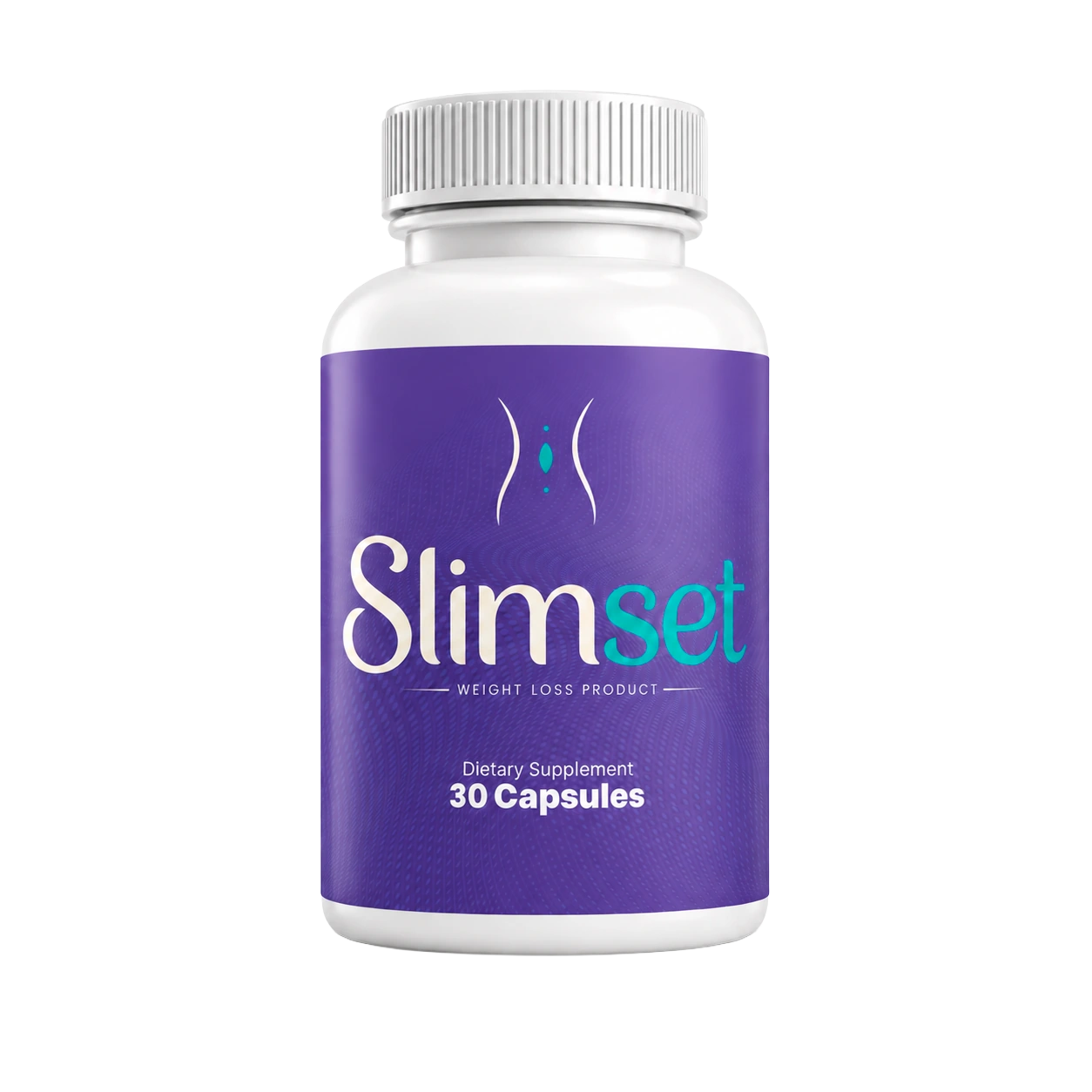
Check seven is a partial for the opposite reason. The bottle itself is unusually restrained: the only claim-like text on the artwork is the category line under the wordmark, plus “Dietary Supplement” and “30 Capsules”. On this shelf that is close to remarkable.
The seller’s sales page is a different document and it does make support claims. Appetite control, everyday fat metabolism and steady energy are its lines, and this website attributes them to it wherever they appear rather than moving them onto the label. A check about what the box claims cannot be scored as a clean pass when the shop window claims more than the box does.
- What the bottle prints is the ceiling. Weight Loss Product — the category line under the wordmark; Dietary Supplement; 30 Capsules.
- The panel has one ordering irregularity. Caffeine anhydrous is the largest row at 138 mg and it is printed fourth, below three rows of 130 mg, where descending order of predominance is the convention.
- Every seller line on this website is marked as a seller line. That is the whole of the difference between the two documents.
The four it passes, which are the reason to read the rest
Four clean rows, and what each one buys a reader.
A scorecard that only reported failures would be as useless as one that only reported passes. Four of these seven are clean, and two of them are things a good deal of this shelf does not manage.
Checks four and five are the interesting pair. Printing 50% chlorogenic acids beside a 130 mg row is what makes 65 mg calculable, and printing Coffea robusta (seed) is what makes the research findable. Together they are the reason the failure on check three can be stated with a number instead of a suspicion. A label that hid either one would score better on this page by disclosing less.
What this label discloses well
- Every active carries a milligram figure and there is no proprietary blend.
- Three of five rows carry a standardisation percentage, so the compound weights can be worked out.
- Botanical species and plant parts are printed in brackets.
- The refund route is 60 days with a telephone number and a return address behind it.
- The capsule shell is hypromellose, so the other-ingredients line holds nothing animal-derived.
What it does not
- Four of five actives sit far below their researched amounts.
- The total caffeine cannot be finished from the panel alone.
- The seller’s page makes support claims the bottle does not.
- Return postage is the buyer’s, at the buyer’s cost.
- No trial of the finished capsule exists, here or anywhere on this shelf.
Running the same seven on the bottle next to it
The three failure patterns this shelf repeats, and what the checks cannot reach.
The checks are not about one brand, which is the point of publishing them. Take them to any metabolism capsule and the same three failure patterns turn up.
The first is a proprietary blend, which kills check one and takes three and four with it. The second is an extract weight with no percentage, which passes check one and fails check four, and is the commonest way a label looks more informative than it is. The third is a stack of caffeine sources with no total, which is a check two failure and the one with an actual safety edge on it.
- A blend total with no row amounts: check one fails, and three and four cannot be attempted.
- “Green tea extract 500 mg” with no percentage: a bigger number than this bottle prints, and less information in it.
- Caffeine anhydrous plus guarana plus yerba mate, none of them bounded: the total is unknowable and it is the number that matters for sleep and blood pressure.
- A promised quantity of weight lost: check seven fails, and it is the failure that should end the purchase.
Five questions the seven checks were never built to answer, kept here so nobody mistakes a disclosure test for something larger: whether a capsule will work for you; whether the contents match the panel, which needs a certificate of analysis rather than a label; whether a supplement is the right approach for what you are dealing with; how the caffeine will interact with a prescription you already take; and whether the review score on any seller’s website reflects anything verifiable. The reviews page here answers the last of those about its own figures.
Who publishes this SlimSet website?
- Astrup A, Toubro S, Cannon S, Hein P, Breum L, Madsen J. Caffeine: a double-blind, placebo-controlled study of its thermogenic, metabolic, and cardiovascular effects in healthy volunteers. Am J Clin Nutr. 1990;51(5):759-67. PMID 2333832. https://pubmed.ncbi.nlm.nih.gov/2333832/
- Dulloo AG, Geissler CA, Horton T, Collins A, Miller DS. Normal caffeine consumption: influence on thermogenesis and daily energy expenditure in lean and postobese human volunteers. Am J Clin Nutr. 1989;49(1):44-50. PMID 2912010. https://pubmed.ncbi.nlm.nih.gov/2912010/
- Wikoff D, Welsh BT, Henderson R, et al. Systematic review of the potential adverse effects of caffeine consumption in healthy adults, pregnant women, adolescents, and children. Food Chem Toxicol. 2017;109(Pt 1):585-648. PMID 28438661. https://pubmed.ncbi.nlm.nih.gov/28438661/
- Jurgens TM, Whelan AM, Killian L, Doucette S, Kirk S, Foy E. Green tea for weight loss and weight maintenance in overweight or obese adults. Cochrane Database Syst Rev. 2012;12(12):CD008650. PMID 23235664. https://pubmed.ncbi.nlm.nih.gov/23235664/
- Boschmann M, Thielecke F. The effects of epigallocatechin-3-gallate on thermogenesis and fat oxidation in obese men: a pilot study. J Am Coll Nutr. 2007;26(4):389S-395S. PMID 17906192. https://pubmed.ncbi.nlm.nih.gov/17906192/
- Onakpoya I, Terry R, Ernst E. The use of green coffee extract as a weight loss supplement: a systematic review and meta-analysis of randomised clinical trials. Gastroenterol Res Pract. 2011;2011:382852. PMID 20871849. https://pubmed.ncbi.nlm.nih.gov/20871849/
- Otaif KD, Adawi HA, Alfaifi FM, et al. Chlorogenic acids and caffeine in commercial green coffee bean extract supplements: quantitative assessment and evidence of mislabelling. Food Addit Contam Part A. 2026;43(6):806-818. PMID 42154619. https://pubmed.ncbi.nlm.nih.gov/42154619/
- Heymsfield SB, Allison DB, Vasselli JR, et al. Garcinia cambogia (hydroxycitric acid) as a potential antiobesity agent: a randomized controlled trial. JAMA. 1998;280(18):1596-600. PMID 9820262. https://pubmed.ncbi.nlm.nih.gov/9820262/
- Onakpoya I, Hung SK, Perry R, Wider B, Ernst E. The Use of Garcinia Extract (Hydroxycitric Acid) as a Weight loss Supplement: A Systematic Review and Meta-Analysis of Randomised Clinical Trials. J Obes. 2011;2011:509038. PMID 21197150. https://pubmed.ncbi.nlm.nih.gov/21197150/
- Morimoto C, Satoh Y, Hara M, Inoue S, Tsujita T, Okuda H. Anti-obese action of raspberry ketone. Life Sci. 2005;77(2):194-204. PMID 15862604. https://pubmed.ncbi.nlm.nih.gov/15862604/
Order SlimSet with the scorecard in front of you
Four passes, two partials and one failure, all of them checkable against a panel that prints 658 mg across five rows. 60 days from purchase to change your mind.
One bottle $89 · six bottles $294 · 60-day money-back guarantee
Order SlimSet On The Official WebsiteOne capsule a day · 30 per bottle · lot SLI-26/GE-8193