SlimSet Official Website › Blog › What Is In SlimSet
What Is In SlimSet? The Ingredients And Label, Row By Row
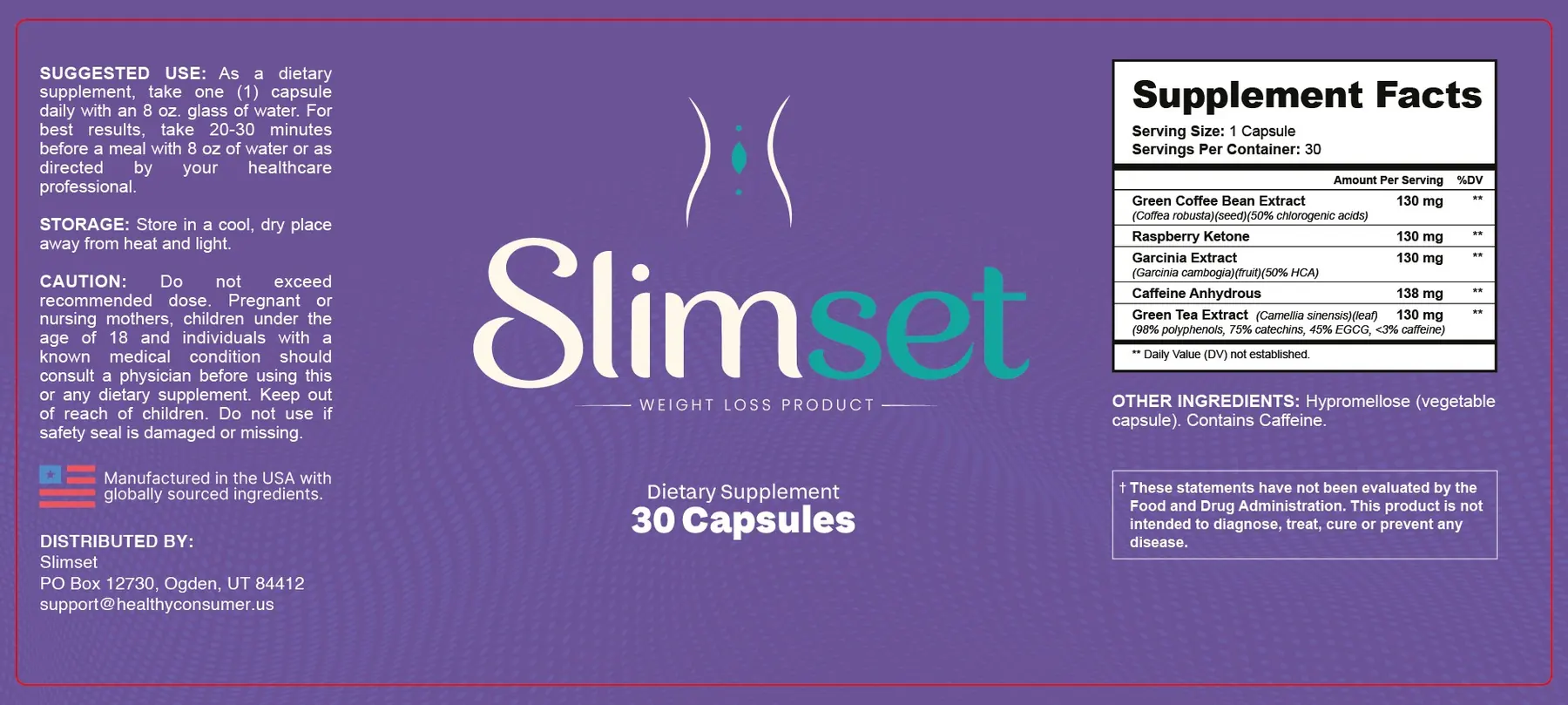
SlimSet is a once-daily vegetable capsule with five actives, each printed with a milligram amount: caffeine anhydrous 138 mg, and green coffee bean, raspberry ketone, garcinia and green tea extract at 130 mg each. That is 658 mg of extract. There is no proprietary blend. The only other ingredient is the hypromellose shell.
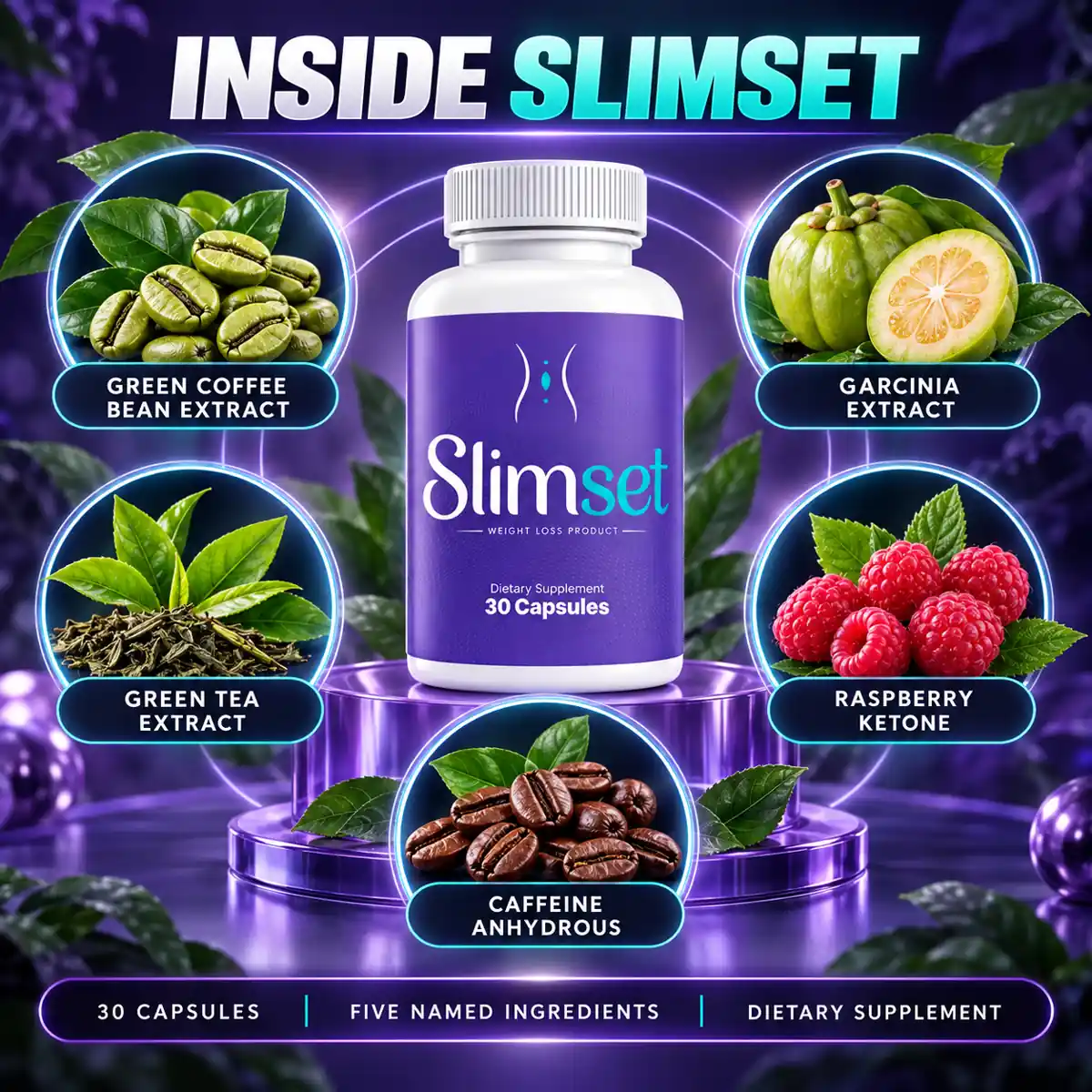
- Serving size: 1 capsule. Servings per container: 30.
- Five actives, 658 mg in total, and no proprietary blend.
- Caffeine anhydrous is the largest row at 138 mg. The other four are 130 mg each.
- Three rows carry standardisation percentages: 50% chlorogenic acids, 50% HCA, and 98% polyphenols, 75% catechins, 45% EGCG, under 3% caffeine.
- Other ingredients: hypromellose (vegetable capsule). The label adds “Contains Caffeine.”
- It is a capsule, not a gummy, a powder or liquid drops.
If you want to know what you are putting in your mouth, the Supplement Facts panel is the one honest page of any bottle. SlimSet prints a fuller panel than many. Here it is, with the arithmetic done so you can read the numbers the way a researcher would.
What is SlimSet, and is it a capsule, pill, gummy or drops?
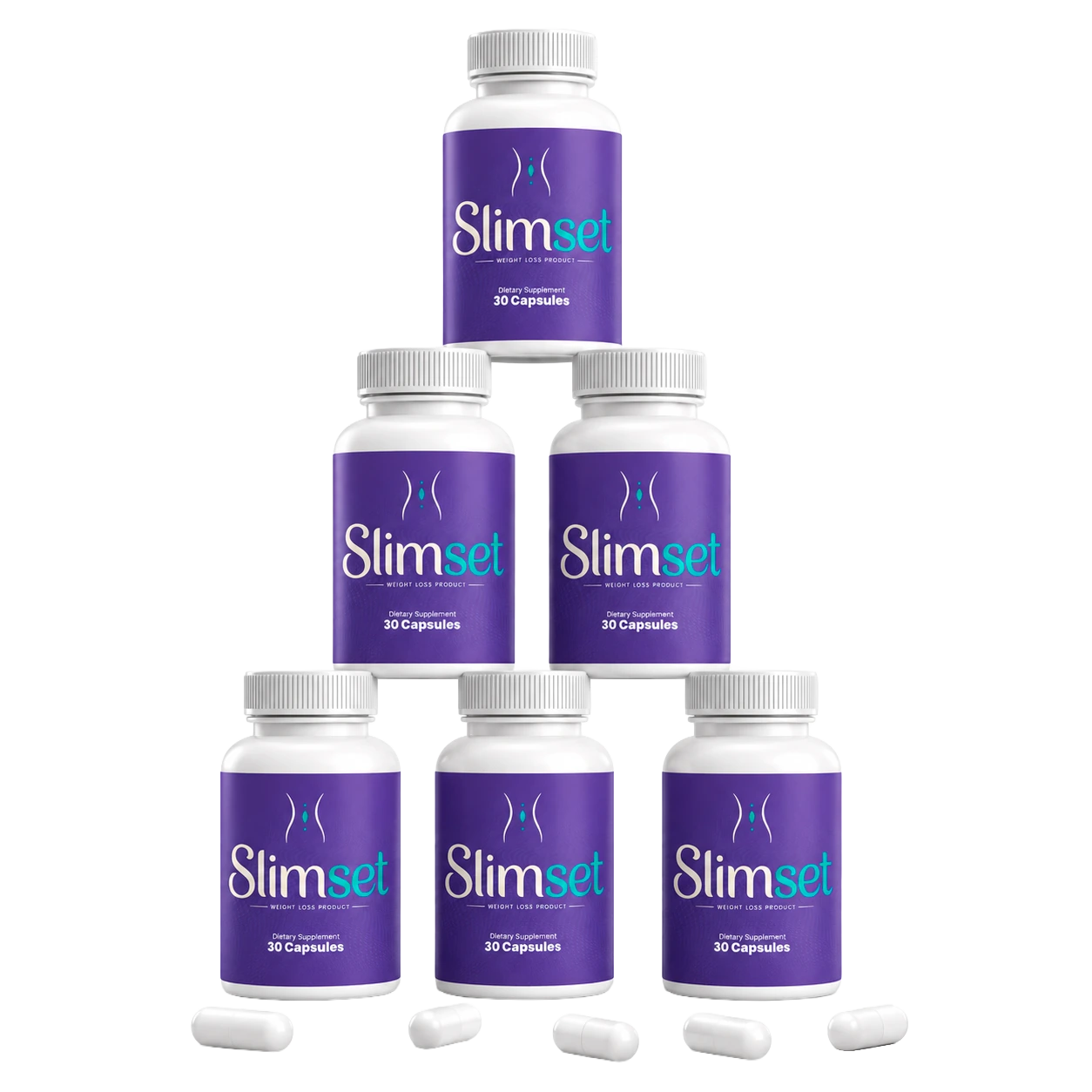
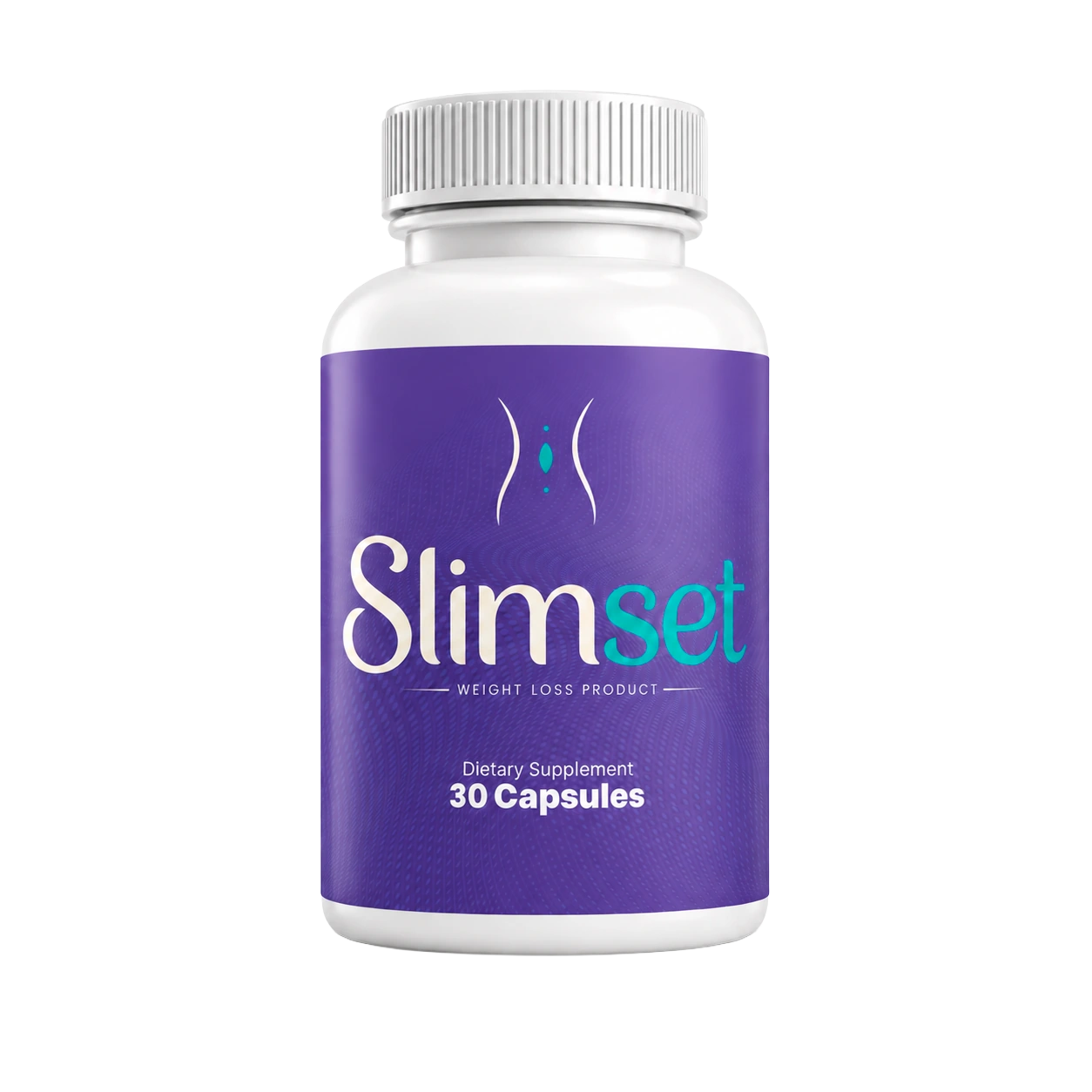
SlimSet is a dietary supplement in capsule form, one a day, sold in a bottle of 30. A bottle is therefore a month. The bottle’s category line reads “Weight Loss Product,” and it also says “Dietary Supplement” and “30 Capsules.” Those three are the only claim-like text printed on the artwork.
So, to the common search: it is not a gummy, not a powder and not liquid drops. “Pills” is fine as everyday speech, but the product is a capsule. The shell is hypromellose, a plant cellulose, so nothing in it is animal-derived.
The appetite, fat metabolism and energy lines belong to the seller’s sales page, and the bottle does not print them.
What does the SlimSet panel actually print?
| Row, as printed | Per capsule | % Daily Value |
|---|---|---|
| Green Coffee Bean Extract (Coffea robusta) (seed) (50% chlorogenic acids) | 130 mg | Not established |
| Raspberry Ketone | 130 mg | Not established |
| Garcinia Extract (Garcinia cambogia) (fruit) (50% HCA) | 130 mg | Not established |
| Caffeine Anhydrous | 138 mg | Not established |
| Green Tea Extract (Camellia sinensis) (leaf) (98% polyphenols, 75% catechins, 45% EGCG, <3% caffeine) | 130 mg | Not established |
The label prints a double asterisk on every row and the footnote “Daily Value (DV) not established.” Serving size one capsule; thirty servings a container.
There is no proprietary blend. A milligram figure is printed for every one of the five actives, and the five add up to 658 mg. One small oddity: caffeine is the largest row but is printed fourth. That is a formatting slip, and it changes no amount.
What does “caffeine anhydrous” mean?
Anhydrous means without water. Take the water out of caffeine and you get a dry, fine powder that can be measured precisely into a capsule. It is the same molecule found in coffee beans and tea leaves, and the body treats it no differently. What changes is precision: a capsule can state the dose, and a cup cannot.
In SlimSet it is the largest row, at 138 mg. The green tea row is capped at under 3% caffeine, so it can add at most about 3.9 mg, and the green coffee row adds a small amount the label does not quantify. A fair total is 138 mg plus single-digit milligrams.
That precision is why this row is the one worth understanding first. When an amount is printed, it can be set beside the amount used in research.
Read the panel on a real bottle
The label prints five amounts and a plain other-ingredients line, so you can check everything on this page yourself.
See today’s price and guaranteeDisclosure: Getslimset, the retailer that runs this website, earns when you buy. It does not earn more from a larger pack.
What do the percentages actually turn into?
An extract weight and a compound weight are not the same thing. Three rows print percentages that convert one into the other.
| Row | Extract weight | Standardised to | Compound delivered |
|---|---|---|---|
| Green coffee bean extract | 130 mg | 50% chlorogenic acids | 65 mg chlorogenic acids |
| Raspberry ketone | 130 mg | single compound | 130 mg raspberry ketone |
| Garcinia extract | 130 mg | 50% HCA | 65 mg hydroxycitric acid |
| Caffeine anhydrous | 138 mg | single compound | 138 mg caffeine |
| Green tea extract | 130 mg | 45% EGCG, within 75% catechins and 98% polyphenols | 58.5 mg EGCG, inside 97.5 mg of catechins |
Adding the last column gives about 456.5 mg of named compound from the 658 mg of extract.
The three green tea percentages are nested, not added. Ninety-eight percent polyphenols is the broadest band, seventy-five percent catechins sits inside it, and forty-five percent EGCG sits inside that. Reading them as three separate quantities is the commonest way this kind of row gets misquoted.
What are the other ingredients, and is SlimSet vegetarian?
One line: hypromellose (vegetable capsule). Then the label prints “Contains Caffeine.” on its own, where a person scanning for warnings will look.
Hypromellose is plant cellulose and the usual vegetarian alternative to a gelatin shell. No animal-derived ingredient is declared. The label also lists no filler, flow agent, sweetener, flavouring, colour or preservative. Its allergen-style statement is the caffeine line, and no milk, soy, wheat, egg, fish or tree nut declaration appears.
If you have an allergy or a dietary rule that matters to you, read the panel on your own bottle. It is short enough to read in a minute.
Which plant parts and species are named?
- Green coffee bean extract: Coffea robusta, seed. Robusta is named on the panel rather than the commoner arabica, and the two differ in acid and caffeine content.
- Garcinia extract: Garcinia cambogia, fruit. The marker compound is hydroxycitric acid, which every garcinia trial has measured.
- Green tea extract: Camellia sinensis, leaf.
- Raspberry ketone and caffeine anhydrous: no species printed, because each is a single compound.
Raspberry ketone is the aroma compound of ripe raspberries. The label does not say whether it comes from fruit or is made in a lab, and the compound is the same either way.
Where do the amounts match the research, and where do they not?
Take the roughly 456.5 mg of named compound in a capsule. Only the 138 mg of caffeine is at an amount the research used. The other 318.5 mg is not, and 130 mg of that is raspberry ketone, which has no human amount to compare with.
- Caffeine, 138 mg: inside the range that raised resting metabolic rate in studies of 100 to 400 mg.
- Chlorogenic acids, 65 mg: under half of 140 mg a day used in the blood pressure trial, and against weight literature that was judged at high risk of bias.
- EGCG, 58.5 mg: about a fifth of the 300 mg used in the thermogenesis pilots.
- HCA, 65 mg: about four percent of the 1,500 mg a day used in the 12-week trial, which found nothing over placebo.
- Raspberry ketone, 130 mg: no human amount published.
None of this says the capsule is unsafe or useless. It says “clinically dosed” would be the wrong phrase, and it tells you where to put your attention.
What are the label, price and guarantee facts at a glance?
A short card to keep next to the panel.
| Item | Published fact |
|---|---|
| Form | Vegetable capsule, one a day, 30 to a bottle |
| Total extract | 658 mg per capsule |
| Suggested use | One capsule a day, with an 8 oz glass of water, ahead of a meal (20-30 minutes) |
| Storage | Cool, dry place away from heat and light |
| Origin | Manufactured in the USA with globally sourced ingredients |
| Price | $89 buys one bottle, $177 buys three, $294 buys six |
| Guarantee | 60 days from the date of purchase |
Prices as read on September 19, 2026.
SlimSet is a dietary supplement. It is not a medicine, and it is not FDA approved. No dietary supplement is. These statements have not been evaluated by the Food and Drug Administration, and the product is not intended to diagnose, treat, cure or prevent any disease. Ask your doctor before you start, and tell them the figure on the label: 138 mg of caffeine anhydrous in each capsule. The label asks the same of anyone who is pregnant or nursing, under 18, or living with a known medical condition.
Frequently asked questions
What is in SlimSet?
The panel lists caffeine anhydrous at 138 mg, then four extracts at 130 mg each: green coffee bean, raspberry ketone, garcinia and green tea. The one other ingredient is the hypromellose capsule shell.
Is there a proprietary blend?
No. Every active has its own row and its own milligram figure, totalling 658 mg per capsule.
How much caffeine is in one capsule?
138 mg of caffeine anhydrous is printed. The green tea row can add under 3.9 mg, and the green coffee row adds a small amount the label does not quantify.
Is SlimSet a pill, a gummy or drops?
It is a capsule with a hypromellose shell. It is not a gummy, a powder or liquid drops.
Is SlimSet vegetarian?
Yes, on the label’s evidence. The capsule shell is hypromellose, made from plant cellulose, and no animal-derived ingredient is declared.
What does caffeine anhydrous mean?
It means caffeine with the water removed, a fine powder that can be weighed exactly. It is the same molecule as the caffeine in coffee.
Our view
The panel is the strongest part of this product. Every row has a number, three rows have standardisation percentages, the stimulant is named twice, and the shell is the only other ingredient. Many labels in this field hide more than they show.
What the panel shows is a caffeine capsule with four modest plant rows. That is fine, as long as you buy it for what it is. Read your own bottle against this page, and let your doctor see the caffeine figure if you have any health condition.
Hold the label against this page
When a bottle arrives, read the panel row by row. If it differs from what is described here, the bottle governs and the order desk wants to know.
See today’s price and guaranteeDisclosure: Getslimset, the retailer that runs this website, earns when you buy. It does not earn more from a larger pack.
Last updated . Reviewed by Dr. Dean Tomlin, Doctor on the same date.
Sources named on this website
- The 2011 meta-analysis of green coffee extract. https://pubmed.ncbi.nlm.nih.gov/20871849/
- The retracted 2012 green coffee trial. https://pubmed.ncbi.nlm.nih.gov/22291473/
- A survey of chlorogenic acid content in commercial extracts. https://pubmed.ncbi.nlm.nih.gov/30888913/
- The 1998 JAMA trial. https://pubmed.ncbi.nlm.nih.gov/9820262/
- The 2011 meta-analysis of hydroxycitric acid. https://pubmed.ncbi.nlm.nih.gov/21197150/
- The 2012 Cochrane review. https://pubmed.ncbi.nlm.nih.gov/23235664/
- A 2007 thermogenesis pilot study. https://pubmed.ncbi.nlm.nih.gov/17906192/
- A 2010 fat oxidation pilot study. https://pubmed.ncbi.nlm.nih.gov/20372175/
- The 1989 thermogenesis study. https://pubmed.ncbi.nlm.nih.gov/2912010/
- The 1990 dose-response study. https://pubmed.ncbi.nlm.nih.gov/2333832/
- The 2005 rodent study. https://pubmed.ncbi.nlm.nih.gov/15862604/
- A 2018 trial of a multi-ingredient supplement. https://pubmed.ncbi.nlm.nih.gov/29111889/
- A 2006 blood pressure trial. https://pubmed.ncbi.nlm.nih.gov/16820341/
- A 2018 metabolic syndrome trial. https://pubmed.ncbi.nlm.nih.gov/29307310/