SlimSet Official Website › Blog › Raspberry Ketone
Raspberry Ketone: The Human Trial Nobody Has Run
This row is printed at 130 mg with no ambiguity about what it contains. There is still no human randomised trial of the compound on its own, at any amount, which makes it a different kind of row from the other four on the panel.
- The panel prints Raspberry Ketone at 130 mg, one of four rows at that figure.
- The evidence trail starts with a 2005 study in which mice were fed the compound at 0.5 to 2% of their diet for ten weeks.
- Those proportions, scaled to an adult, are far beyond anything a capsule could carry.
- The nearest human work gave a multi-ingredient product alongside exercise and a diet, so nothing can be attributed to the ketone alone.
- There is no human amount in the literature against which to judge 130 mg.
What raspberry ketone is
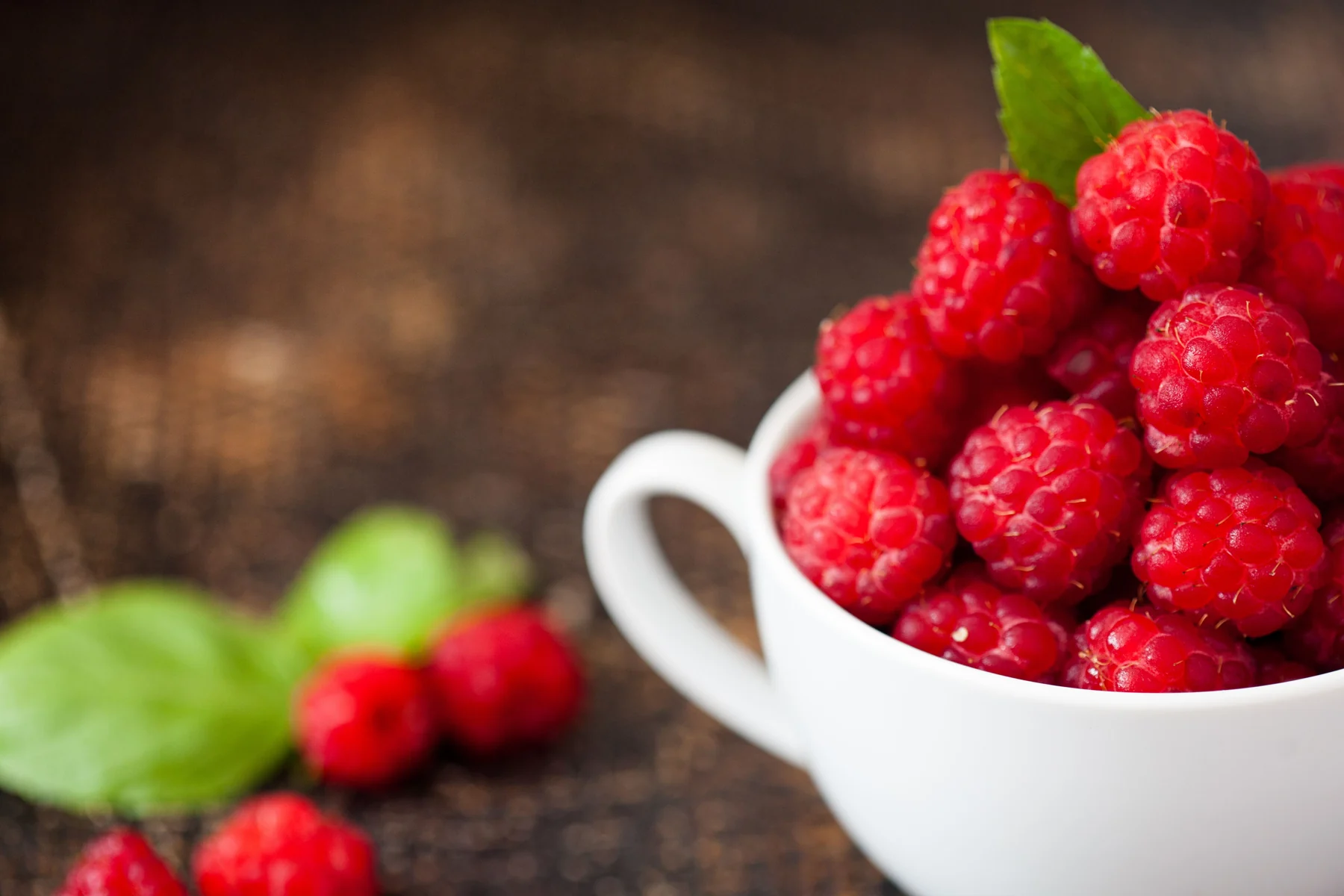
Raspberry ketone is a single aromatic compound, and it is the one responsible for the smell of a ripe raspberry. In the food industry it has a long and entirely respectable history as a flavouring.
It is present in the fruit in very small quantities, so extracting it from raspberries at supplement scale would be absurdly expensive. Almost all of what reaches a capsule is synthesised, which is neither a scandal nor a secret. The molecule is the same either way.
Because it is a compound rather than a plant extract, the row on a panel needs no standardisation percentage. 130 mg means 130 mg of the compound. As disclosure goes, this row is complete.
The study everything rests on
The reason this ingredient exists on supplement shelves at all is a 2005 study in Life Sciences reporting an anti-obese action of raspberry ketone. It was a rodent experiment, and the design is what matters.
Mice were fed diets in which raspberry ketone made up between 0.5% and 2% of total intake, for ten weeks. The investigators reported effects on body fat and on markers of fat metabolism in those animals.
As rodent work goes it was perfectly reasonable, and it justified somebody running a human trial. Two decades later, nobody has.
| What exists | What it tested | What it cannot answer |
|---|---|---|
| A 2005 rodent study | mice fed raspberry ketone at 0.5–2% of the diet for ten weeks | whether any amount a person could swallow does anything |
| A 2018 combination trial | a multi-ingredient supplement alongside exercise and a diet, in overweight adults | what the ketone contributed on its own, since nothing isolated it |
| No isolated human randomised trial | — | there is no human amount to set a label row against |
This is the whole of the directly relevant evidence base as it stands, rather than a selection from it.
Why the mouse amounts do not travel
The proportions in that study are the part worth sitting with. A compound at 1% of total dietary intake is not a supplement dose in any recognisable sense.
An adult eating around 2,000 kilocalories a day is consuming roughly 400 to 500 grams of food by dry weight. One per cent of that is four to five grams. A 130 mg capsule is roughly three per cent of a single gram.
Rodent-to-human dose translation is a real discipline with established methods, and it never produces a figure anybody would call favourable here. The gap is not a matter of a factor of two or three; it is orders of magnitude, before any question of species differences in metabolism is raised at all.
There is a second problem underneath the arithmetic, and it is the more fundamental one. Mice and people handle many compounds differently: absorption, the enzymes that modify a molecule once it is absorbed, and how quickly it is cleared can all differ substantially between the two species. An effect measured in a mouse is a reason to look in a person, which is precisely what a clinical trial is for.
So the honest position on the 2005 study is neither that it proves something nor that it was bad work. It did what a well-run animal experiment does: it produced a hypothesis. Twenty years on, that hypothesis has not been tested in people, and an untested hypothesis is what this row carries.
Every SlimSet row is printed, including this one
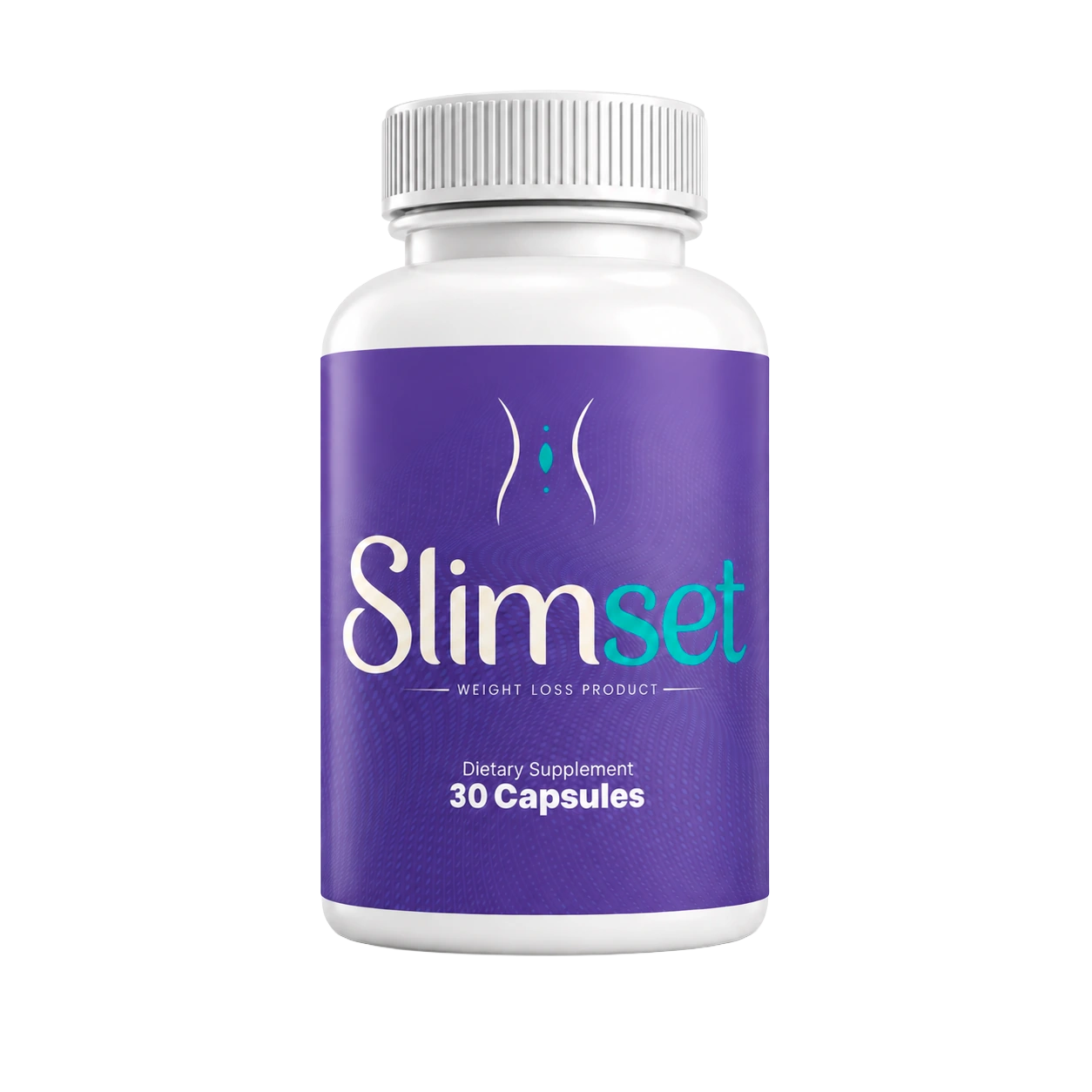
Five actives, a milligram figure against each, no proprietary blend and 658 mg declared in total. 60 days from purchase to change your mind.
One bottle $89 · six bottles $294 · 60-day money-back guarantee
Order SlimSet On The Official WebsiteOne capsule a day · 30 per bottle · lot SLI-26/GE-8193
The nearest thing to human evidence
Searching the human literature for a randomised controlled trial of raspberry ketone on its own returns nothing. The closest available study is a 2018 trial of a multi-ingredient dietary supplement given alongside exercise and a diet to overweight adults, which measured body composition and adipokine changes.
Raspberry ketone was one component of that product among several. A combination trial measures a combination, and no statistical technique can separate out one ingredient's contribution after the fact. If the product had worked spectacularly, the ketone's share would still be unknown.
So the accurate description of this row's evidence base is not that it is weak. It is that it is absent, which is a different statement and a more honest one.
Why this row is different from the other four
The other four rows on this panel can all be argued about, and three of them come off badly in that argument. But they can be argued about, because there is something to argue with.
| Ingredient | What a trial used | What it found |
|---|---|---|
| Caffeine anhydrous | 100 mg single, then 100 mg every two hours | resting metabolic rate raised 3–4% for about 150 minutes |
| Hydroxycitric acid | 1,500 mg a day for twelve weeks in 135 people | no separation from placebo |
| Green tea catechins | twelve and thirteen-week randomised trials | minus 0.04 kg outside Japan in the pooled review |
| Raspberry ketone | no human trial at any amount | nothing can be stated in either direction |
The first three rows are what a testable ingredient looks like, whether the answer is encouraging or not. The fourth is a different situation entirely.
Look at the first three rows of that table. The caffeine work produced a number. The hydroxycitric acid trial produced a null result, which is also a number. The green tea review produced minus 0.04 kg, which is very nearly zero and is still an answer.
The fourth row cannot join that table, because nobody has produced a figure for it in either direction. That is the whole point of this article and it is the only conclusion it draws.
What this is not saying
Three things this article is careful not to claim.
- Not a safety warning. Raspberry ketone has a long history as a food flavouring and nothing here should be read as a caution about taking it.
- Not a claim that it does nothing. An absence of evidence is not evidence of absence. Somebody may yet run the trial and find something.
- Not a criticism of the disclosure. This row is one of the most precisely stated on the panel: a named compound at a stated weight, with no ambiguity to hide behind.
The criticism is narrower than any of those. It is that an ingredient with no human trial cannot be described as dosed, and no page on this website describes it that way.
What a row like this is doing on a panel
The commercial answer is not complicated. Raspberry ketone has name recognition, it sounds like food rather than chemistry, and it costs very little. Those are the reasons it appears on this shelf, and pretending otherwise would insult anybody reading.
The proportionate way to hold it is as one row of five. It is 130 mg of a declared 658 mg, on a panel whose caffeine row is the one present at a researched amount. A capsule is not made worthless by carrying an unevidenced ingredient, and it is not made effective by carrying five of them.
What the row does cost this product is the ability to describe the formula as evidence-based without qualification. The scorecard guide records that as a failed check rather than working around it.
Three questions for any ingredient with no trial
- Is there a human randomised trial of this compound on its own? If the answer is no, no amount on any label can be called a dose.
- If the evidence is animal work, what proportion of the diet was used, and what would that be in a person?
- If the human evidence is a combination product, what would be left of the claim if the other ingredients were removed?
Those three questions retire a surprising number of ingredients across this shelf. The category guide runs them across every ingredient this shelf is built from.
A dietary supplement for healthy adults of 18 and over, not a medicine and not FDA-approved. The bottle prints no support claim of any kind. Appetite control, everyday fat metabolism and steady energy are the seller’s sales-page lines and are attributed there wherever they appear on this website.
References
- Morimoto C, Satoh Y, Hara M, Inoue S, Tsujita T, Okuda H. Anti-obese action of raspberry ketone. Life Sci. 2005;77(2):194-204. PMID 15862604. https://pubmed.ncbi.nlm.nih.gov/15862604/
- Arent SM, Walker AJ, Pellegrino JK, et al. The Combined Effects of Exercise, Diet, and a Multi-Ingredient Dietary Supplement on Body Composition and Adipokine Changes in Overweight Adults. J Am Coll Nutr. 2018;37(2):111-120. PMID 29111889. https://pubmed.ncbi.nlm.nih.gov/29111889/
- Heymsfield SB, Allison DB, Vasselli JR, et al. Garcinia cambogia (hydroxycitric acid) as a potential antiobesity agent: a randomized controlled trial. JAMA. 1998;280(18):1596-600. PMID 9820262. https://pubmed.ncbi.nlm.nih.gov/9820262/
- Jurgens TM, Whelan AM, Killian L, Doucette S, Kirk S, Foy E. Green tea for weight loss and weight maintenance in overweight or obese adults. Cochrane Database Syst Rev. 2012;12(12):CD008650. PMID 23235664. https://pubmed.ncbi.nlm.nih.gov/23235664/
- Dulloo AG, Geissler CA, Horton T, Collins A, Miller DS. Normal caffeine consumption: influence on thermogenesis and daily energy expenditure in lean and postobese human volunteers. Am J Clin Nutr. 1989;49(1):44-50. PMID 2912010. https://pubmed.ncbi.nlm.nih.gov/2912010/