SlimSet Official Website › Blog › Coffea Robusta
Coffea Robusta: Why This Panel Names A Species Most Labels Skip
An earlier article on this blog noted, in passing, that the green coffee row names its species: Coffea robusta. That single word is unusual on a supplement label, and it is worth a full article of its own, because the species a green coffee extract is made from changes what is actually in the capsule before any standardisation percentage is even applied.
- Coffee sold for drinking is overwhelmingly arabica (Coffea arabica); robusta (Coffea canephora) is the second major species, more common in instant coffee and espresso blends than in specialty roasts.
- Published research using laboratory measurement, not brand claims, consistently finds robusta beans carry more caffeine than arabica beans.
- The genes controlling caffeine synthesis are expressed differently between the two species, which is a mechanism, not just a correlation.
- Caffeine and chlorogenic acid content are reliable enough to tell the two species apart by laboratory measurement alone.
- The single most famous green coffee trial, since retracted, did not report which species its extract came from.
Coffee is not one plant
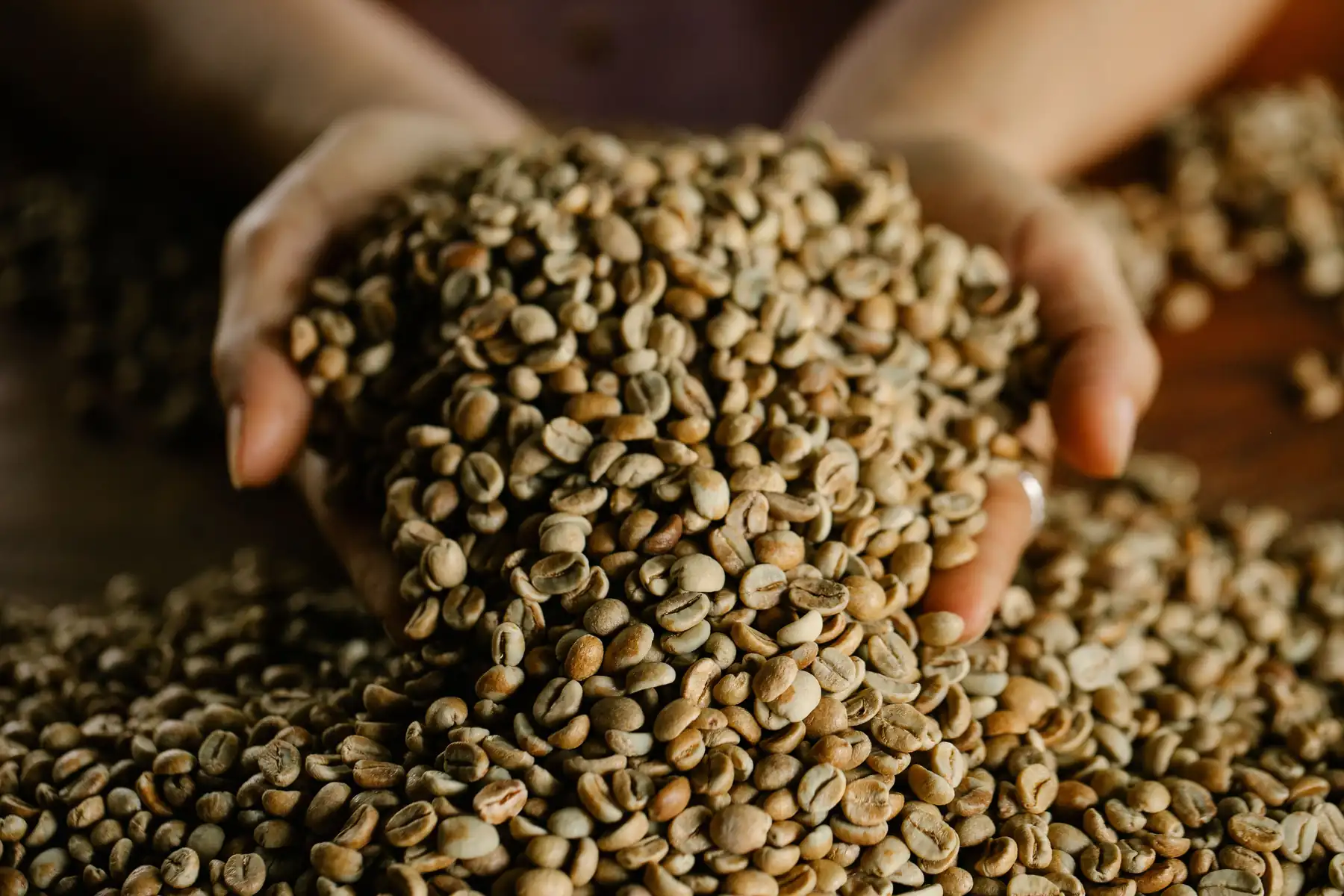
Almost everyone who has read a green coffee bean extract label has read past the species name without noticing it was there to read. “Green Coffee Bean Extract” sounds like a single, settled thing. Botanically it is not. The coffee genus, Coffea, contains dozens of species, but two account for essentially all commercial coffee: Coffea arabica, which supplies most specialty and drip coffee, and Coffea canephora, almost always sold and labelled as robusta, which is more common in instant coffee, some espresso blends, and a meaningful share of green coffee extract used in supplements.
The two species are not interchangeable raw material that happens to carry different brand names. They differ in their chemistry before any extraction or standardisation happens, and that is the fact this article is about.
Why robusta runs higher on caffeine
The difference is not folklore. A 2015 study in the journal Planta mapped the genes controlling caffeine synthesis in both species and reported that caffeine accumulation runs higher in Coffea canephora (robusta) than in Coffea arabica across the varieties the researchers analysed. The paper traced this to differences in which caffeine-synthesis genes are switched on, and how strongly, between the two species — a molecular explanation for a pattern growers and roasters have observed for generations.
That is worth sitting with for a moment. This is not a claim about one grower’s beans versus another’s. It is a difference built into the species’ own genetics, expressed consistently enough across samples to be worth publishing as a mechanism rather than an anecdote.
Measuring it rather than assuming it
A claim this useful should be checkable, and it is. A 2020 study in the journal Foods set out to solve a practical problem: coffee buyers are sometimes sold one species labelled as the other, and visual inspection of green beans cannot reliably catch it. The researchers measured caffeine and chlorogenic acid content directly using UV-Vis spectroscopy and found the two compounds separated arabica from robusta beans with 97% accuracy — high enough that the paper proposes the method as a practical adulteration test for the coffee trade.
A separate chemical survey of commercial Coffea genotypes, published in the International Journal of Food Sciences and Nutrition, measured caffeine and multiple chlorogenic acid compounds across several named coffee varieties and traced which ones shared closer chemical ancestry with robusta and which with arabica, using the same two compounds this label prints.
The detail worth taking from both papers is the same: caffeine and chlorogenic acid are not incidental numbers on this panel. They are, independently, reliable enough as chemical signatures to identify which species a bean came from in a laboratory that has never seen the packaging.
| Question | What the published research shows |
|---|---|
| Does robusta reliably carry more caffeine than arabica? | Yes, and the difference is traceable to gene expression, not just growing conditions |
| Can the species be told apart by chemistry alone? | Yes, at up to 97% accuracy using caffeine and chlorogenic acid content together |
| Does this panel name a species? | Yes — Coffea robusta, printed directly under the ingredient name |
| Do most competing green coffee labels name a species? | Rarely; “green coffee bean extract” alone is the common phrasing |
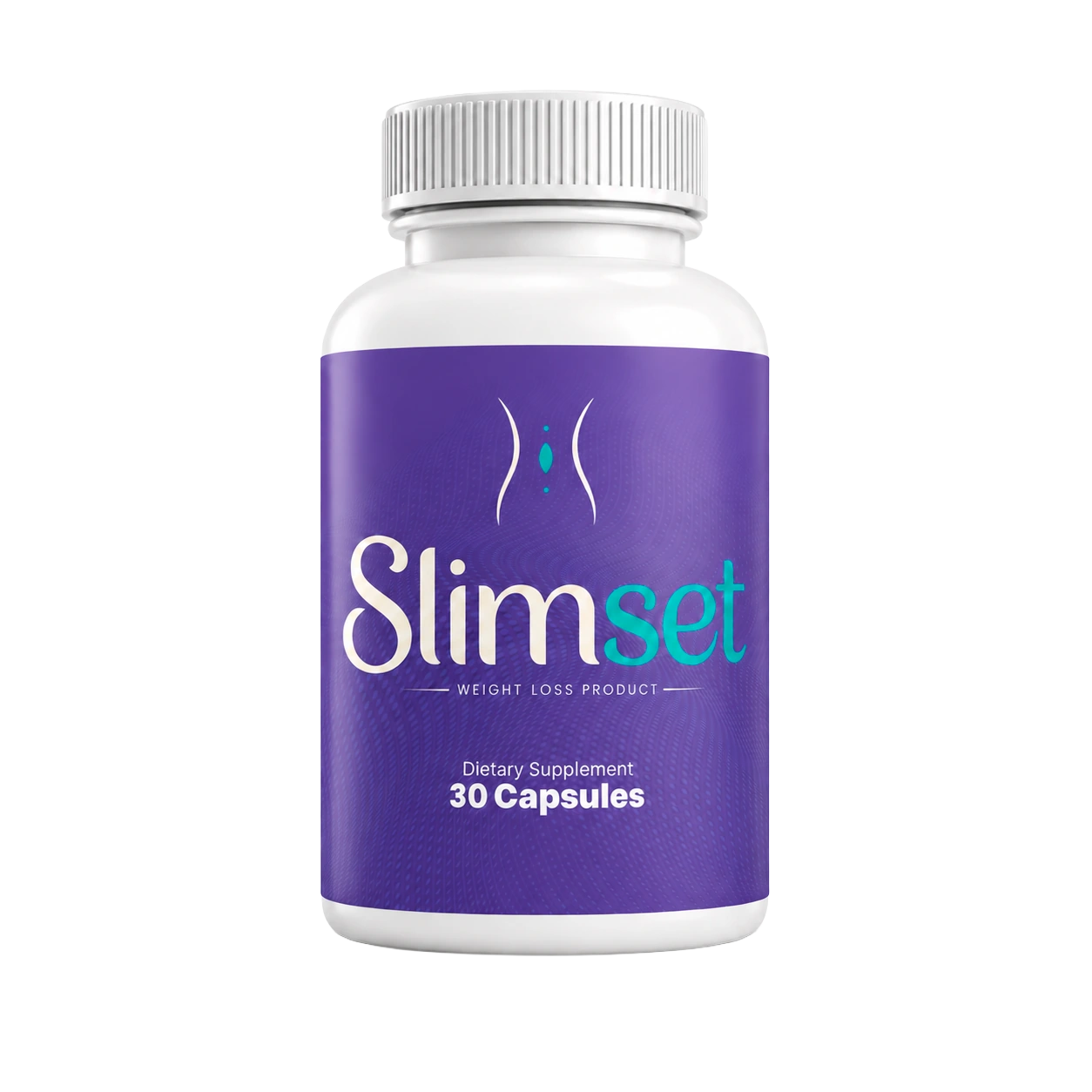
Read every printed detail on this panel, species included
Five rows, every milligram printed, one species named where most labels leave it out. The supplement facts page carries the full breakdown.
One bottle $89 · six bottles $294 · 60-day money-back guarantee
Order SlimSet On The Official WebsiteOne capsule a day · 30 per bottle · lot SLI-26/GE-8193
How much higher, stated honestly
Food-science literature is often quoted as putting robusta’s caffeine content at roughly double arabica’s on a dry-weight basis. That figure shows up widely in agronomy and food-chemistry writing, but the exact numbers vary by study, growing region, and processing method, and neither of the papers cited above reports a single definitive percentage for either species. The honest version of this claim is therefore a range rather than a fixed figure: published measurements consistently rank robusta above arabica on caffeine content, by a margin that different studies describe as substantial, without a single number this article can point to as the authoritative one. Anyone who sees a precise number quoted as universal fact — “robusta has exactly twice the caffeine” — is reading a simplification of a real but more variable pattern.
What is not in dispute across the cited papers is the direction of the difference and its consistency: every study referenced here that compared the species on caffeine found robusta higher, using different methods, different bean sources, and different years of publication.
What happens to chlorogenic acid
Chlorogenic acid is the compound this same ingredient is more commonly standardised and marketed for, and it follows its own species pattern rather than mirroring caffeine’s. The 2020 discrimination study cited above used chlorogenic acid alongside caffeine specifically because the two compounds separate the species in different, complementary ways, which is part of why measuring both together reached 97% accuracy where either alone would likely do worse.
This site has already worked through the chlorogenic acid dose-math for this exact panel in a companion article, The Retracted Trial Behind Green Coffee Bean, which carries the 130 mg row at 50% chlorogenic acids through to its 65 mg figure and sets that against the published efficacy threshold. That article is the place for the dose question; this one is about the species the extract came from in the first place.
The trial that made the ingredient famous named no species
Green coffee bean extract became a mass-market ingredient largely on the strength of a small crossover trial that has since been retracted and is flagged as such on PubMed. Setting the retraction aside for a moment, the trial is also a useful example of the labelling gap this article is about: like the large majority of green coffee marketing copy built on it since, the published paper does not specify which Coffea species its extract was derived from.
That is not unusual for the category, and it is not necessarily evidence of anything sinister. It does mean that a reader trying to connect any published green coffee trial to a specific bottle on a shelf is usually working with one fewer piece of information than this label provides.
What this panel actually prints
Read in full, the green coffee row on this label says: Green Coffee Bean Extract, Coffea robusta, seed, 130 mg, standardised to 50% chlorogenic acids. Four separate, checkable facts in one line: the ingredient, the species, the plant part, and the amount with its standardisation. Species and plant part are the two most commonly omitted, and this row prints both.
- The genus and common name: green coffee bean extract.
- The species: Coffea robusta, printed directly under the ingredient name.
- The plant part: seed, meaning the bean itself rather than the fruit or leaf.
- The amount and standardisation: 130 mg, 50% chlorogenic acids.
None of that makes the ingredient more or less effective at the dose this label carries — that question belongs to the chlorogenic acid article linked above. What it does is let a reader who wants to connect this row to published research identify which species that research needs to be about, which most competing labels do not allow at all.
Why the species line is worth reading at all
A species name on a supplement panel will not change anyone’s morning. Its value is narrower and more durable than that: it is one more piece of the formula that can be checked against an independent source rather than taken on the seller’s word, in a category where most of the label cannot be checked at all.
- Look for a species name on any green coffee row; its absence is the norm, not the exception.
- Treat robusta and arabica as chemically distinct raw materials, not interchangeable marketing terms.
- Read a quoted “robusta has double the caffeine” figure as a common approximation, not a lab result from any specific study.
- Remember that chlorogenic acid, the compound this ingredient is usually sold for, follows its own separate species pattern.
- Use the printed standardisation, not the species name, to answer the dose question — that arithmetic lives in the companion article linked above.
A dietary supplement for healthy adults of 18 and over, not a medicine and not FDA-approved. The species name on this row is a fact about the raw material, not a claim about the finished capsule’s effect, and this article does not change the dose arithmetic worked out elsewhere on this site.
References
- Adnan A, Naumann M, Mörlein D, Pawelzik E. Reliable Discrimination of Green Coffee Beans Species: A Comparison of UV-Vis-Based Determination of Caffeine and Chlorogenic Acid with Non-Targeted Near-Infrared Spectroscopy. Foods. 2020;9(6):788. PMID 32560064. https://pubmed.ncbi.nlm.nih.gov/32560064/
- Perrois C, Strickler SR, Mathieu G, Lepelley M, Bedon L, Michaux S, Husson J, Mueller L, Privat I. Differential regulation of caffeine metabolism in Coffea arabica (Arabica) and Coffea canephora (Robusta). Planta. 2015;241(1):179-91. PMID 25249475. https://pubmed.ncbi.nlm.nih.gov/25249475/
- Bicho NC, Leitão AE, Ramalho JC, Lidon FC. Chemical descriptors for sensory and parental origin of commercial Coffea genotypes. Int J Food Sci Nutr. 2012;63(7):835-42. PMID 22486463. https://pubmed.ncbi.nlm.nih.gov/22486463/
- Vinson JA, Burnham BR, Nagendran MV. Randomized, double-blind, placebo-controlled, linear dose, crossover study to evaluate the efficacy and safety of a green coffee bean extract in overweight subjects. Diabetes Metab Syndr Obes. 2012;5:21-7. PMID 22291473. Retracted Publication. https://pubmed.ncbi.nlm.nih.gov/22291473/
- SlimSet product label artwork, supplied in the vendor asset pack. Serving size one capsule, 30 per container. Distributed by Slimset, PO Box 12730, Ogden, UT 84412.