SlimSet Official Website › Blog › The Retracted Green Coffee Trial
The Retracted Trial Behind Green Coffee Bean Extract
One crossover study put this ingredient on daytime television and onto several thousand labels. PubMed now files it as a Retracted Publication. Here is what happened, what the rest of the literature says, and what the ingredient does have behind it.
- Green coffee bean extract is standardised to chlorogenic acids; this panel prints 130 mg at 50%, which is 65 mg.
- The 2012 trial that launched the ingredient is filed by PubMed as a Retracted Publication.
- The 2011 meta-analysis reported a pooled figure while judging every included trial at high risk of bias.
- A 2026 assay of twenty-three commercial products found mislabelling, including two declaring 50% chlorogenic acids in which none was detected.
- The blood pressure literature is the strand that has held up, and it used 140 mg of chlorogenic acid a day.
What the ingredient is
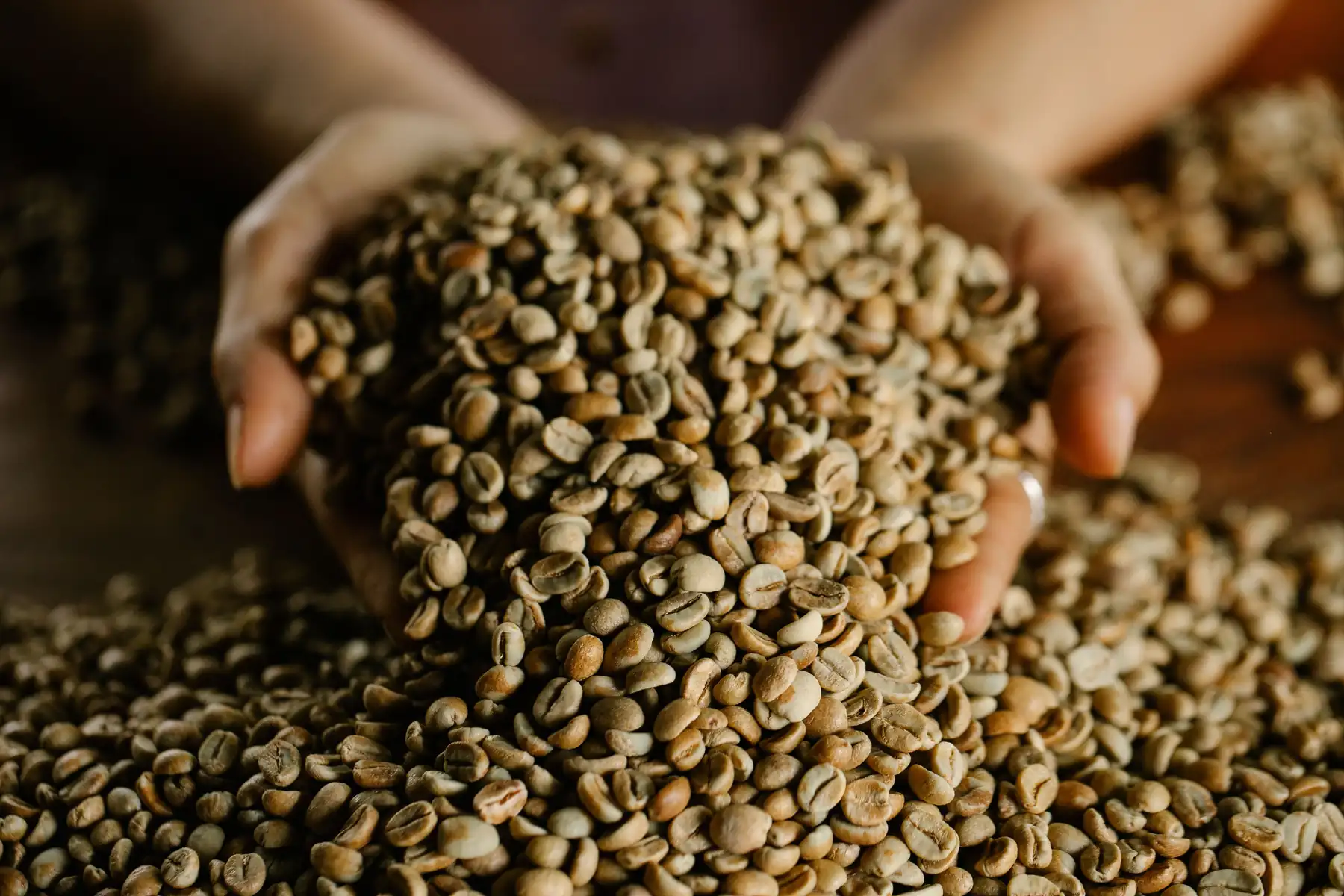
Green coffee beans are simply coffee beans that have not been roasted. They are rich in chlorogenic acids, a family of plant compounds that roasting largely destroys, which is why the extract is made from the green bean rather than from anything in a cafe.
Chlorogenic acids are genuinely interesting compounds with a substantial research literature. The question on a supplement panel is narrower than that: how many milligrams of them a capsule delivers, and what happened when that quantity was given to people.
This panel answers the first half precisely. Green Coffee Bean Extract, Coffea robusta, seed, 130 mg, standardised to 50% chlorogenic acids. That multiplies to 65 mg, and 65 mg is the figure to carry into the rest of this article.
The trial, and what became of it
Between 2012 and about 2015 green coffee bean extract went from obscurity to a fixture on the shelf, almost entirely on the strength of one study.
That 2012 randomised, double-blind, placebo-controlled crossover study tested a green coffee bean extract at two amounts in overweight subjects and reported a striking result. It was promoted heavily on television, and the demand it created reached the supply chain within months.
PubMed now records it as a Retracted Publication. The retraction is part of the permanent record of the paper, and it is why this article cites the study by that record rather than leaving it out. A reader who half-remembers the television segment is owed the rest of the story, not silence about it.
| Paper | What it reported | Where it stands now |
|---|---|---|
| The 2011 meta-analysis | a pooled result of about minus 2.5 kg from the trials available then | its authors judged every included trial at high risk of bias and called the evidence insufficient |
| The 2012 crossover trial | the result that reached daytime television and built the category | filed by PubMed as a Retracted Publication |
| A 2026 assay of commercial products | chlorogenic acids and caffeine measured across twenty-three supplements | evidence of mislabelling, including products declaring 50% chlorogenic acids with none detected |
Three papers, in the order they appeared. The middle row is the one most people remember and the only one that has been withdrawn.
The meta-analysis that came first
A 2011 systematic review and meta-analysis had already pooled the randomised trials available at the time and reported a mean difference of roughly minus 2.5 kg. That number is still quoted.
What is quoted far less often is the rest of the same paper. Its authors judged every included trial to be at high risk of bias, noted that the trials were small and short, and concluded that the evidence was not sufficient to recommend the ingredient. A pooled figure drawn from trials the reviewers did not trust is not a stronger result than those trials; it is the same weakness averaged.
That distinction is the single most useful thing anybody can learn from this ingredient's history, and it applies well beyond green coffee.
What is actually in the bottles
A separate problem sits underneath the evidence question, and it is about manufacturing rather than biology.
A 2026 study assayed twenty-three commercial green coffee bean extract supplements for chlorogenic acids and caffeine. It found mislabelling across the sample, including products that declared 50% chlorogenic acids and in which none was detected at all.
That finding does not describe any particular bottle, including this one. What it does is establish that a percentage on a box is a specification the manufacturer is asserting, and that assertions in this supply chain have been tested and found wanting often enough to be worth knowing about. The batch verification page sets out what this desk can and cannot confirm about the lot in front of it.
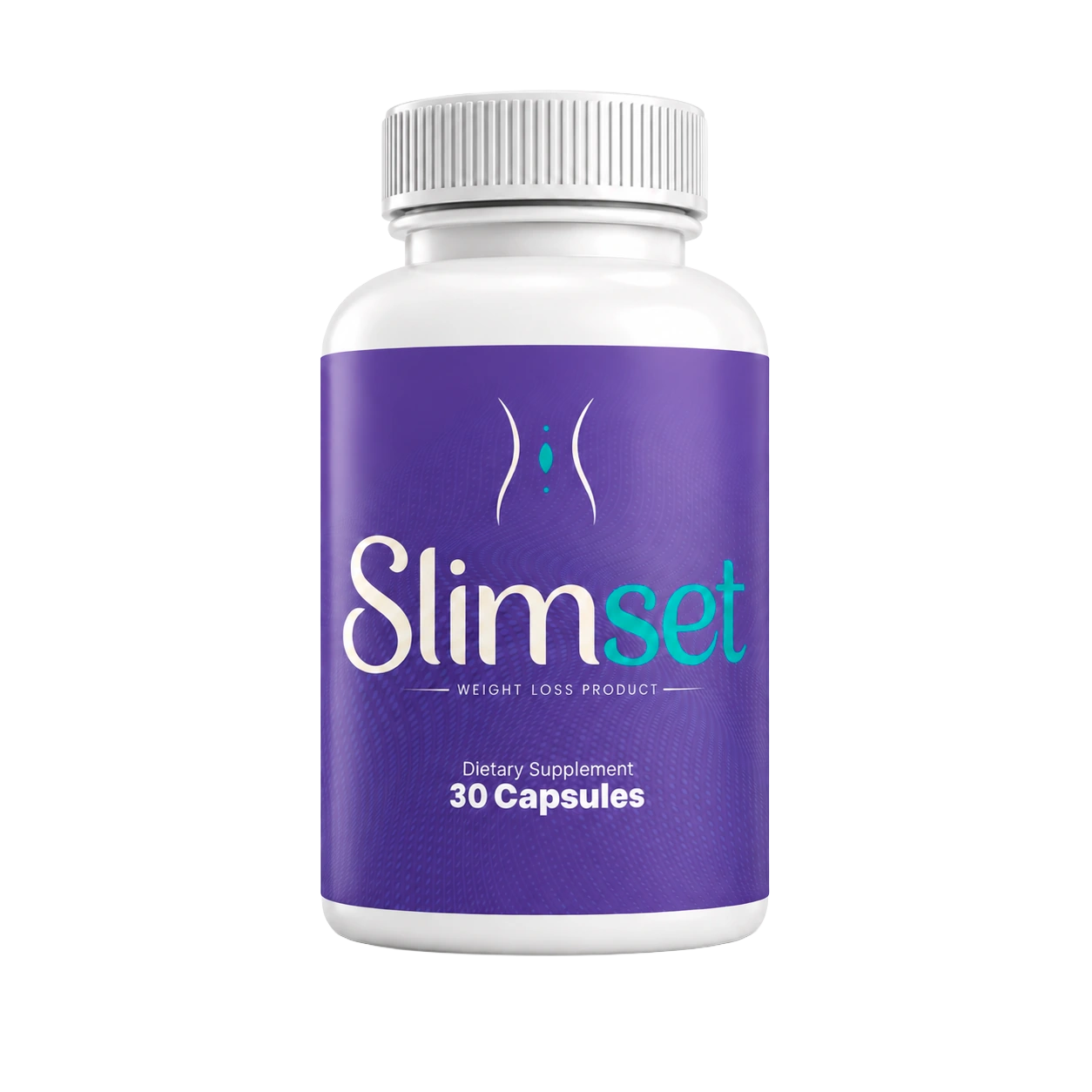
The SlimSet panel prints its standardisation, which is where checking starts
130 mg of green coffee bean extract at 50% chlorogenic acids, one of five rows with a milligram figure against it. 60 days from purchase to change your mind.
One bottle $89 · six bottles $294 · 60-day money-back guarantee
Order SlimSet On The Official WebsiteOne capsule a day · 30 per bottle · lot SLI-26/GE-8193
The strand of research that held up
Dropping an ingredient because its most famous trial was withdrawn would be as careless as believing the trial. Chlorogenic acids have a body of work behind them, and it points in a direction the marketing rarely mentions.
| Study | Amount used | Population | Outcome measured |
|---|---|---|---|
| 2006 blood pressure trial | 140 mg of chlorogenic acid a day, twelve weeks | adults with essential hypertension | blood pressure and safety |
| 2018 metabolic syndrome trial | 400 mg of green coffee extract a day, eight weeks | patients with metabolic syndrome | anthropometry, glycaemic control, blood pressure, lipids, insulin resistance, appetite |
| 2024 dose-response meta-analysis | pooled across randomised trials | mixed | blood pressure and heart rate |
This is the strand of the green coffee literature that has held up. None of it is about the outcome the ingredient is usually sold for.
The 2006 trial gave 140 mg of chlorogenic acid a day for twelve weeks to adults with essential hypertension and measured blood pressure and safety. A 2018 trial ran 400 mg of extract a day for eight weeks in metabolic syndrome and measured a broad panel of outcomes. A 2024 dose-response meta-analysis pooled the blood pressure and heart rate work.
Read together, the sturdier findings for this compound family sit in cardiovascular measures rather than in the outcome it is sold for. That is a real result and it is not the result printed on the boxes.
Reading the 65 mg on this panel
Set the two numbers beside each other and the position is plain. The blood pressure trial used 140 mg of chlorogenic acid a day. This row supplies 65 mg, which is under half of it, and blood pressure is not what anybody is buying this capsule for.
For the weight literature there is no equivalent comparison to draw, because the trials that produced the attractive number were judged unreliable by the people who pooled them and the most influential one has been withdrawn. A row cannot be measured against a standard that does not hold.
- The row is fully disclosed. Species, plant part, weight and standardisation are all printed, so the 65 mg can be calculated by anybody.
- It is under half the amount used in the trial with the clearest protocol behind it.
- That trial measured blood pressure, in people with hypertension, over twelve weeks.
- No trial of this finished capsule exists, so nothing here can be attributed to the combination either.
What the ingredient is not being accused of
The criticism above is narrow, and marking its edges is part of making it.
- Not a safety concern at this amount. 65 mg of chlorogenic acids is well inside ordinary dietary exposure; a cup of coffee delivers a comparable quantity.
- Not a worthless compound. The cardiovascular work is genuine research with reasonable protocols behind it.
- Not concealed. This label prints the standardisation, which is what makes the criticism calculable in the first place.
- Not the whole capsule. It is one row of five on a panel where the caffeine is the amount doing the work, and that row has its own article.
Four questions for any green coffee row
This ingredient appears across the shelf. Four questions sort the labels quickly.
- Is a chlorogenic acid percentage printed? Without it the row cannot be compared with any study.
- What does the multiplication give, and how does it sit against 140 mg a day?
- Is the species named? Coffea robusta and Coffea arabica differ in their chlorogenic acid content.
- Does the seller cite the 2012 trial? If it does, it is citing a retracted paper, and that is worth knowing before buying anything from it.
On this bottle the answers run: yes at 50%, 65 mg against 140 mg, Coffea robusta seed, and no. Three of those four are the answers a careful buyer wants. The ingredients page carries the same comparison for all five rows.
A dietary supplement for healthy adults of 18 and over, not a medicine and not FDA-approved. The bottle prints no support claim at all. Appetite control, everyday fat metabolism and steady energy are the seller’s sales-page lines and are attributed there. Nothing in this article, in either direction, changes that ceiling.
References
- Vinson JA, Burnham BR, Nagendran MV. Randomized, double-blind, placebo-controlled, linear dose, crossover study to evaluate the efficacy and safety of a green coffee bean extract in overweight subjects. Diabetes Metab Syndr Obes. 2012;5:21-7. Retracted Publication. PMID 22291473. https://pubmed.ncbi.nlm.nih.gov/22291473/
- Onakpoya I, Terry R, Ernst E. The use of green coffee extract as a weight loss supplement: a systematic review and meta-analysis of randomised clinical trials. Gastroenterol Res Pract. 2011;2011:382852. PMID 20871849. https://pubmed.ncbi.nlm.nih.gov/20871849/
- Otaif KD, Adawi HA, Alfaifi FM, et al. Chlorogenic acids and caffeine in commercial green coffee bean extract supplements: quantitative assessment and evidence of mislabelling. Food Addit Contam Part A. 2026;43(6):806-818. PMID 42154619. https://pubmed.ncbi.nlm.nih.gov/42154619/
- Watanabe T, Arai Y, Mitsui Y, et al. The blood pressure-lowering effect and safety of chlorogenic acid from green coffee bean extract in essential hypertension. Clin Exp Hypertens. 2006;28(5):439-49. PMID 16820341. https://pubmed.ncbi.nlm.nih.gov/16820341/
- Roshan H, Nikpayam O, Sedaghat M, Sohrab G. Effects of green coffee extract supplementation on anthropometric indices, glycaemic control, blood pressure, lipid profile, insulin resistance and appetite in patients with the metabolic syndrome: a randomised clinical trial. Br J Nutr. 2018;119(3):250-258. PMID 29307310. https://pubmed.ncbi.nlm.nih.gov/29307310/
- Samavat S, Kaviani M, Nikooyeh B, et al. The effects of green coffee bean extract on blood pressure and heart rate: A systematic review and dose-response meta-analysis of randomized controlled trials. Diabetes Metab Syndr. 2024;18(9):103120. PMID 39368321. https://pubmed.ncbi.nlm.nih.gov/39368321/