SlimSet Official Website › Blog › CYP1A2 And Caffeine
CYP1A2 And Caffeine: Why The Same 138 mg Hits People Differently
Every row on this panel is a fixed number. The body reading it is not. A single gene controls most of how quickly caffeine clears the bloodstream, it comes in at least two common working versions, and a 2006 study in the Journal of the American Medical Association found that version alone changed whether coffee was linked to a lower or higher heart-attack risk. This article reads that study and a newer one together, and neither reads the way a simple “fast metabolizer, slow metabolizer” story would predict.
- CYP1A2 is the liver enzyme responsible for roughly 95% of caffeine clearance, and its activity varies substantially between people because of common gene variants.
- A 2006 JAMA case-control study of 2,014 heart-attack patients and 2,014 matched controls found coffee intake raised MI risk only in carriers of the slower-metabolizing CYP1A2*1F variant (interaction p = .04).
- In carriers of the rapid-metabolizing *1A/*1A genotype, the same coffee intake showed no such rise, and trended the other way in people under 59.
- A 2026 trial in recreational athletes found the “rapid” AA genotype reached significantly higher measured blood caffeine after an identical dose than the AC genotype — the opposite of what the rapid/slow label implies about a single dose.
- No study has genotyped anyone against this panel's specific 138 mg row; the two studies below used their own doses of coffee or bodyweight-scaled caffeine, and the honest reading below says so throughout.
The enzyme that reads this row
Caffeine anhydrous is a single, well-defined molecule, and the body has one main route for clearing it. Roughly 95% of an ingested dose is processed by cytochrome P450 1A2 (CYP1A2), a liver enzyme that converts caffeine into paraxanthine, the compound responsible for most of caffeine's own downstream effects. A minority of caffeine is handled by other pathways, but for practical purposes CYP1A2 is the gatekeeper.
CYP1A2 does not just clear caffeine; it also metabolises a wide range of other exogenous compounds, and a 2023 review in the journal Gene describes large interindividual variability in its expression and catalytic activity, driven substantially by common polymorphisms — single nucleotide changes in the gene that alter how active or inducible the enzyme is. That variability is the entire subject of this article: the same 138 mg row can arrive at meaningfully different places depending on which version of this one gene a person carries.
Two labels, one gene: rapid and slow
The best-studied CYP1A2 variant sits at a position researchers call rs762551, and it comes in an A form and a C form. The 2006 JAMA study below defines its own terms precisely, and this article keeps to that definition rather than inventing a simpler one: people homozygous for the CYP1A2*1A allele (AA) are labelled “rapid” caffeine metabolizers, and carriers of the variant CYP1A2*1F allele (AC or CC) are labelled “slow” metabolizers.
Both versions are common. In the JAMA study's own Costa Rican population, 55% of heart-attack cases and 54% of matched controls carried the slow *1F allele — in other words, roughly half the population in that sample was not the “fast” type. Nothing about either genotype is rare or unusual; the split runs close to even in most populations that have been studied.
The 2006 JAMA study, read in full
The study, published in JAMA in 2006, set out to answer a question that had been muddled in earlier coffee research: does coffee raise heart-attack risk, lower it, or do nothing, and could the inconsistent answers in the literature be explained by genetics rather than by coffee itself?
The design was a case-control study in Costa Rica: 2,014 people with a first acute nonfatal myocardial infarction, matched by age, sex and area of residence against 2,014 population controls. Everyone was genotyped for the CYP1A2 variant above, and everyone completed a food-frequency questionnaire recording coffee intake.
| Coffee intake per day | Odds ratio, slow (*1F) carriers | Odds ratio, rapid (*1A/*1A) carriers |
|---|---|---|
| Less than 1 cup | 1.00 (reference) | 1.00 (reference) |
| 1 cup | 0.99 (0.69–1.44) | 0.75 (0.51–1.12) |
| 2 to 3 cups | 1.36 (1.01–1.83) | 0.78 (0.56–1.09) |
| 4 or more cups | 1.64 (1.14–2.34) | 0.99 (0.66–1.48) |
Figures are the study's own multivariate-adjusted odds ratios and 95% confidence intervals for nonfatal myocardial infarction, by CYP1A2 genotype. Gene × coffee interaction p = .04.
Read across the top row: among slow metabolizers, risk climbed steadily with intake, reaching an odds ratio of 1.64 at four or more cups a day, with a confidence interval that did not cross 1. Among rapid metabolizers, the odds ratios never climbed meaningfully above 1 at any intake level. The interaction between genotype and coffee intake was itself statistically significant (p = .04), which is the study's way of saying the two genotype groups were not simply noisy versions of the same underlying pattern — they moved in genuinely different directions.
What the interaction actually shows
The effect sharpened further when the authors split the sample by age. Among people younger than the study's median age of 59, slow metabolizers drinking four or more cups a day had an odds ratio of 2.33 (95% CI 1.39–3.89) versus under one cup. Rapid metabolizers of the same age drinking the same amount had an odds ratio of 0.83 (0.46–1.51) — a confidence interval that straddles 1 and points, if anything, slightly the other way.
That is the study's central finding, stated plainly: coffee's association with heart-attack risk in this population was not a property of coffee alone. It depended on which version of one gene the drinker carried. The authors' own conclusion was that caffeine, acting through this genetic difference in clearance, plausibly explains why coffee's cardiovascular reputation has been so inconsistent across studies that never checked genotype at all.
It is a case-control study of coffee drinking in a Costa Rican population, not a trial of a 138 mg caffeine capsule, and it cannot establish that any specific dose is safe or unsafe for any specific genotype. It also cannot say what a person's own genotype is without a test; nobody can infer it from how caffeine subjectively feels.
A 2026 trial, and a result that runs backwards
A study published in the European Journal of Sport Science in 2026 took a different approach: rather than watching habitual coffee intake over years, it gave a single measured dose and drew blood. Thirty-eight recreationally active male participants were genotyped for the same CYP1A2 variant, sorted into AA homozygotes (n = 19) and AC heterozygotes (n = 19), then given either 6 mg per kilogram of bodyweight of caffeine or a placebo before a 10-km run or 40-km cycling time trial.
Caffeine improved time-to-completion by 1.8% overall (p = .05) and raised heart rate compared with placebo (p = .02) — caffeine doing what caffeine reliably does before endurance exercise. The genetic result is the one worth slowing down for. Plasma caffeine concentrations were significantly higher in the AA (“rapid”) group than the AC (“slow”) group, both at individual timepoints (p = .04) and across the full area under the concentration-time curve (p = .01).
That is the opposite of what the rapid/slow labelling would predict for a single dose. A “rapid metabolizer” sounds like it should clear caffeine faster and therefore run lower blood levels, not higher ones. The study's own authors note that no caffeine-gene interaction was observed for time-to-completion, heart rate, or the downstream metabolites paraxanthine and theophylline — so the genotype changed measured blood caffeine without changing the two performance outcomes the trial tracked.
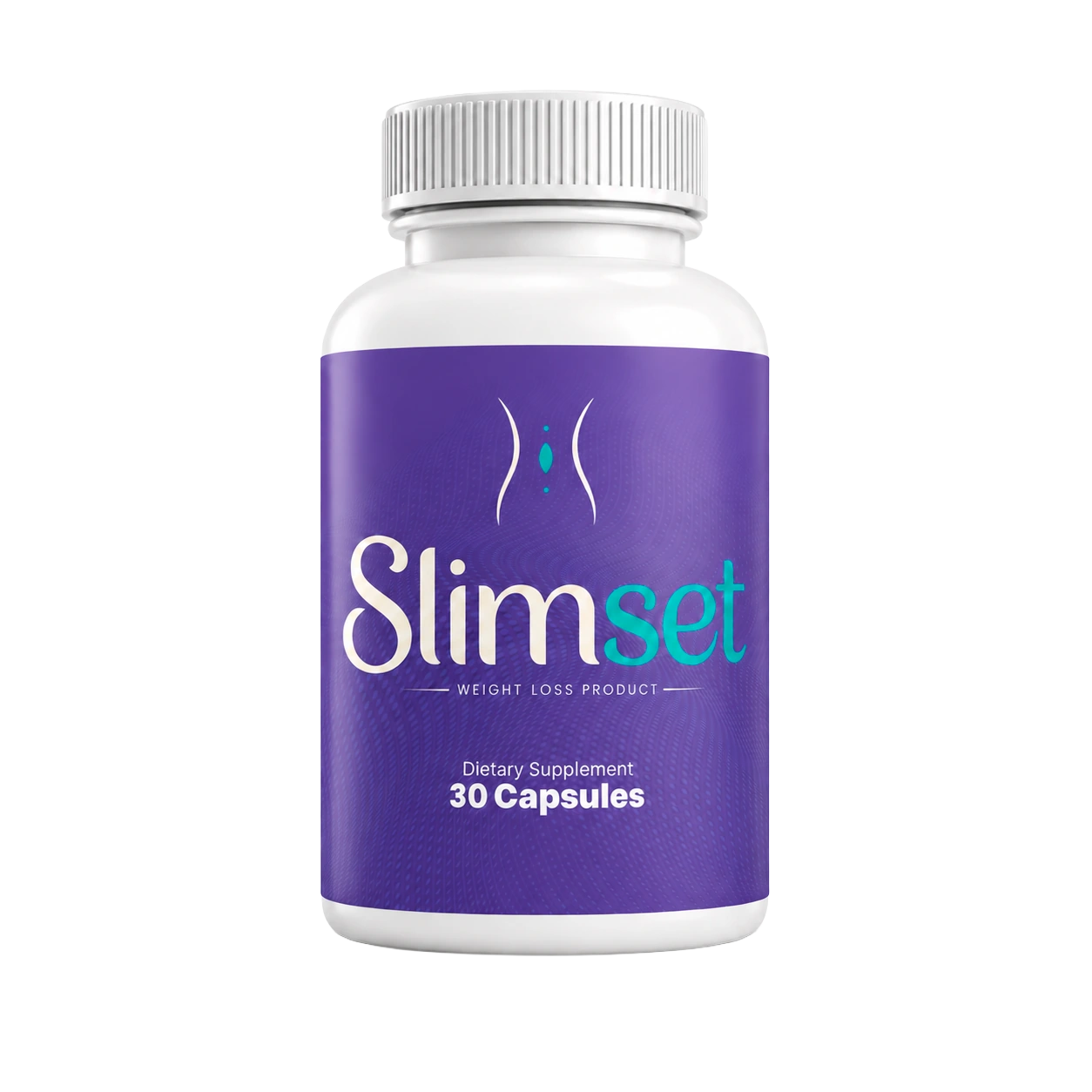
See what else this panel's caffeine row does at 138 mg
Genotype is one variable behind the same number. Dose, timing and total daily intake are the other three, and this site has a separate article carrying each one through in full.
One bottle $89 · six bottles $294 · 60-day money-back guarantee
Order SlimSetOne capsule a day · 30 per bottle
What neither study can tell a capsule label
Reconciling the two findings honestly, rather than picking whichever one sounds tidier, means sitting with a genuinely open question. The 2006 study's rapid/slow labels describe how the gene behaves under chronic, habitual coffee exposure measured over years and linked to a clinical outcome. The 2026 study's AA/AC labels describe the same underlying variant, measured after one acute dose in a controlled setting, tracked against a blood level rather than a disease outcome. Both are legitimate ways to study CYP1A2. They are not the same experiment, and a single dose's blood level is not the same measurement as decades of cardiovascular risk.
What can be said without overreaching: the *1A/*1F variant genuinely changes how the body handles caffeine, in more than one measurable way, and at least one of those ways runs against the simple story where “fast metabolizer” means uniformly lower exposure. Anyone who has read a confident claim online that a DNA test will tell them exactly how their body handles a caffeine capsule is reading a simpler story than the published research supports.
Applying it to a 138 mg row
Neither cited study tested this label's actual dose, so the honest version of this section is arithmetic and inference, not a result borrowed from a trial that used a different number.
| This panel | The 2006 JAMA study | The 2026 trial | |
|---|---|---|---|
| Caffeine source | 138 mg caffeine anhydrous, plus small amounts from the green coffee and green tea rows | Habitual brewed coffee, self-reported cups per day | A single 6 mg/kg bodyweight dose, capsule-equivalent |
| What genotype changed | Not tested at this dose | Heart-attack risk, at 4+ cups/day, in the *1F carriers only | Measured blood caffeine (AUC), higher in the AA group |
| What genotype did not change | — | Risk among *1A/*1A (rapid) carriers, at any intake shown | Time-to-completion or heart rate response |
This panel's own row is not a study dose; it is set beside the two cited studies' own doses for scale, not as a substitute result.
A person weighing roughly 63 kg taking the dose used in the 2026 trial (6 mg/kg) would be taking about 378 mg in that single research dose — well above this capsule's 138 mg row. That arithmetic matters because it means the 2026 trial's specific blood-level numbers cannot be rescaled onto this label directly; what carries over is the qualitative finding that genotype measurably changed blood caffeine after a single dose, not the specific concentrations reported.
What this means for reading your own week
- CYP1A2 genotype is common in both common forms; there is roughly an even split in most studied populations, so assuming either version is rare is a mistake.
- The clearest clinical signal in the literature involves habitual, years-long coffee intake and cardiovascular risk in slow metabolizers — not a single capsule, and not this specific dose.
- Genotype also changes acute blood levels after a single measured dose, and it does not always change them in the direction the rapid/slow label implies.
- Nobody can read their own genotype from how alert or jittery caffeine makes them feel; that is a mix of tolerance, body size, sleep debt and other factors, not a genetic test.
- A commercial genetic test is the only way to know which version of CYP1A2 a person carries, and even then, neither study here licenses a specific dosing recommendation from the result.
None of that changes what the label already says: one capsule a day, not two, with a full glass of water. What this article adds is the reason a fixed 138 mg number can land differently in two people who took the identical capsule at the identical time — and why “I don't feel much from caffeine” is not, on its own, proof of which genotype is behind it.
A dietary supplement for healthy adults of 18 and over, not a medicine and not FDA-approved. Anyone with a heart condition, high blood pressure, or a family history of either should raise a caffeine-containing supplement with a clinician before starting it, regardless of genotype. Nothing in this article is a substitute for that conversation.
References
- Cornelis MC, El-Sohemy A, Kabagambe EK, Campos H. Coffee, CYP1A2 genotype, and risk of myocardial infarction. JAMA. 2006;295(10):1135-41. PMID 16522833. https://pubmed.ncbi.nlm.nih.gov/16522833/
- Masters C, Ali A, Badenhorst C, Dickens M, Rutherfurd-Markwick K. The Effect of CYP1A2 Gene Polymorphisms on Caffeine Pharmacokinetics and Exercise Performance in Male Recreational Athletes. Eur J Sport Sci. 2026;26(7):e70203. PMID 42230302. https://pubmed.ncbi.nlm.nih.gov/42230302/
- Kukal S, Thakran S, Kanojia N, Yadav S, Mishra MK, Guin D, Singh P, Kukreti R. Genic-intergenic polymorphisms of CYP1A genes and their clinical impact. Gene. 2023;857:147171. PMID 36623673. https://pubmed.ncbi.nlm.nih.gov/36623673/
- SlimSet product label artwork, supplied in the vendor asset pack. Serving size one capsule, 30 per container. Distributed by Slimset, PO Box 12730, Ogden, UT 84412.