SlimSet Official Website › Blog › Caffeine, Ghrelin And Appetite
Caffeine, Ghrelin And Appetite: What The Suppression Trials Actually Measured
“Appetite control” is a phrase from the sales page, not a line printed on this bottle. The honest question is whether it survives contact with the trials that actually measured caffeine against hunger hormones in a laboratory. Four of them did exactly that, and caffeine on its own did not have a good day.
- “Appetite control” appears on the seller’s sales page. The bottle itself prints no support claim.
- A 2012 crossover trial found caffeine in water had no effect on hunger or the satiety hormone PYY — decaffeinated coffee did.
- A 2011 trial found caffeinated coffee left appetite, energy intake and inflammation markers unchanged, while raising cortisol.
- A 2024 trial in women with overweight or obesity found no ghrelin difference from coffee, and a higher desire for sweet food afterward.
- A 2005 trial found high habitual caffeine consumers lost more weight than low consumers — through thermogenesis and fat oxidation, and with lower leptin in women, not through a clean appetite-suppression signal.
Where “appetite control” comes from
Three phrases show up describing this formula: appetite control, everyday fat metabolism, and steady energy. All three come from the seller’s own sales page, not from the panel on the bottle itself, which states only the category, the ingredient list, the amounts and the instructions. That distinction matters here more than anywhere else on this site, because appetite is the one claim with a direct biological test attached to it. A trial can draw blood, measure a hormone and settle the question in a way a metabolic-rate percentage cannot settle a feeling of hunger.
So this article does the thing a sales page cannot do: it goes to the trials that put caffeine in front of a fasted volunteer, drew blood on a schedule, and asked whether the hunger hormones moved. Four of them, spanning 2005 to 2024, answer the question about as directly as nutrition research gets.
The two hormones a trial can actually measure
Appetite research leans on two peptides that can be drawn from a blood sample and read as numbers rather than guessed at from a questionnaire. Ghrelin is made mostly in the stomach and rises before a meal, which is why it is nicknamed the hunger hormone; it falls after eating. Peptide YY, usually written PYY, does close to the opposite: it is released from the gut after food arrives and is associated with satiety, the feeling of having had enough.
A supplement that genuinely suppressed appetite through a hormonal route would be expected to blunt the rise in ghrelin, lift PYY, or both, measured against a placebo in a controlled setting. That is a testable claim, and it has now been tested with caffeine specifically as one of the arms.
Coffee, hunger and PYY: caffeine was the arm that did nothing
A 2012 trial published in the Journal of the American College of Nutrition ran a four-way crossover in eleven healthy men: caffeine dissolved in water, caffeinated coffee, decaffeinated coffee, or a water placebo, each followed sixty minutes later by a glucose load. Hunger and satiety were rated on visual scales eight times per visit, and blood was drawn for ghrelin, PYY and leptin.
The result splits the ingredient from the beverage in a way that is genuinely useful to read. Decaffeinated coffee produced significantly lower hunger across the full three-hour window and significantly higher PYY for the first ninety minutes, compared with placebo. Caffeine dissolved in water — the isolated ingredient, the form closest to what this capsule delivers — had no effect on hunger and no effect on PYY. Caffeinated coffee sat between the two, closer to decaf than to caffeine alone. The authors’ own conclusion was that some non-caffeine component of coffee, not the caffeine, is doing whatever appetite work coffee does.
| Arm | Hunger over 3 hours | Plasma PYY, first 90 min |
|---|---|---|
| Water (placebo) | reference | reference |
| Caffeine in water | no significant change | no significant change |
| Caffeinated coffee | intermediate | intermediate |
| Decaffeinated coffee | significantly lower | significantly higher |
Eleven healthy men, single-blind, placebo-controlled, four-way crossover. Caffeine in water is the closest match in this trial to what a caffeine anhydrous capsule delivers on its own.
This is not a fringe result. It is the specific comparison this capsule’s appetite claim needs to survive, run by researchers whose stated purpose was to find out whether coffee helps with weight control, and the caffeine-alone arm is where the effect went missing.
Cortisol instead of appetite
A 2011 trial in the Journal of Nutrition gave sixteen healthy men a standard breakfast alongside 3 mg of caffeine per kilogram of body weight in coffee, the same coffee decaffeinated, or water, and tracked appetite ratings, ad libitum energy intake at 180 minutes, and a panel of glucose, insulin and inflammatory markers.
None of the appetite ratings differed by condition. Ad libitum energy intake — how much volunteers chose to eat when finally allowed to — did not differ either. Glucose, insulin and the inflammatory markers were flat across all three arms. The one thing that moved was serum cortisol, which rose significantly after caffeinated coffee compared with control from the sixty-minute mark onward. The paper’s own title states the finding plainly: caffeinated coffee does not acutely affect energy intake, appetite or inflammation, but it does raise cortisol.
Cortisol is a stress hormone, not a satiety hormone, and a temporary rise from one cup is not itself alarming. It is, however, evidence of what caffeine reliably does in this kind of trial — it moves the stress axis, measurably and repeatably — set against what it does not reliably do, which is move appetite.
Read the panel, then decide what a capsule can promise
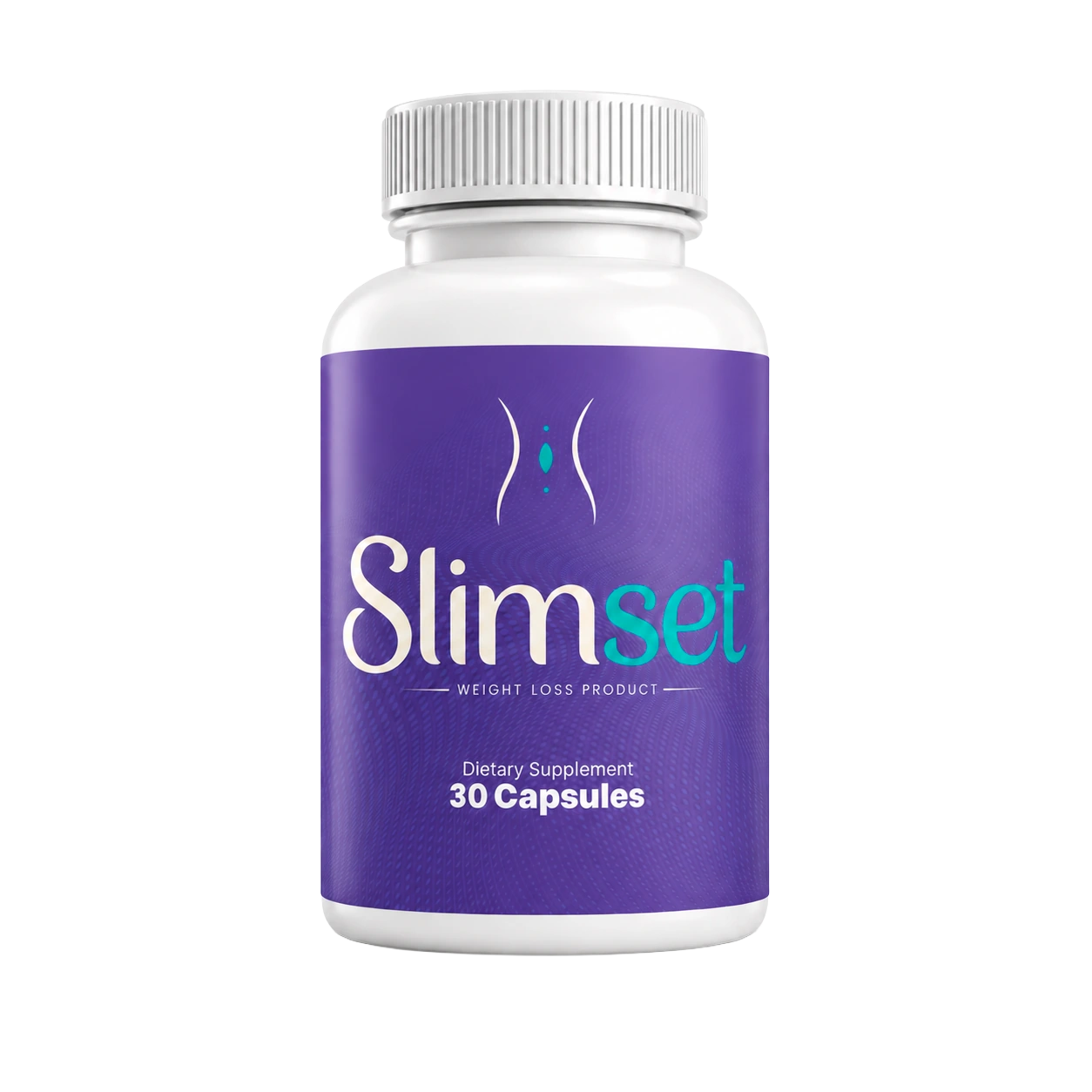
Five actives, a milligram figure against every one, 658 mg declared in total. One capsule a day, 30 to a bottle, with 60 days from purchase to change your mind.
One bottle $89 · six bottles $294 · 60-day money-back guarantee
Order SlimSet On The Official WebsiteOne capsule a day · 30 per bottle · lot SLI-26/GE-8193
A 2024 trial built for exactly this question
A 2024 pilot crossover trial is the most directly relevant of the four, because it was run specifically in women with overweight or obesity, the population a weight-management capsule is actually marketed to. Participants drank either 240 mL of coffee dosed at 6 mg of caffeine per kilogram of body weight, or 240 mL of water, alongside a standardized breakfast, with hunger, satiety and a specific-desire scale recorded every thirty minutes for three hours and blood drawn at fasting, thirty and 180 minutes.
Ghrelin and cholecystokinin, a second satiety-related peptide, showed no detectable difference between the coffee and water sessions. What did differ was less encouraging for a weight-management pitch: the coffee session produced a greater desire for sweet foods, higher fructose intake later in the day, and higher triglyceride levels than the water session. The authors’ conclusion was that coffee may raise triglycerides and simple-sugar intake through its effect on sensory-specific desire, which is close to the opposite of an appetite-control finding.
One pilot trial in one population is not the final word, and the authors frame it that way themselves. It is nonetheless the trial that most closely matches the buyer this capsule is aimed at, and it did not find the hormone shift the marketing language implies.
What habitual caffeine did over months, not just one morning
A different kind of evidence comes from tracking real dieters rather than a single laboratory morning. A 2005 randomized trial in Obesity Research put 76 overweight and moderately obese adults through a four-week very-low-energy diet and then three months of weight maintenance, grouping them by their habitual caffeine intake going in. High habitual caffeine consumers lost more weight, fat mass and waist circumference during the diet phase than low consumers — but the paper attributes that to thermogenesis and a higher rate of fat oxidation during weight loss, not to eating less. At baseline, satiety was positively associated with habitual caffeine intake, which is an association between two things measured on the same day rather than a controlled test of caffeine causing satiety, and in women, higher habitual caffeine intake tracked with lower leptin, a hormone that normally signals fullness to the brain — the opposite of the direction an appetite-suppression story would want.
Read plainly, this trial adds real support to a metabolic-rate story for habitual caffeine drinkers, which is a different article on this site. It does not add support to an appetite-hormone story, and the one appetite-adjacent hormone it measured directly, leptin, moved the wrong way for that story in women.
Why the story is not simply negative
None of this means caffeine does nothing relevant to a day of eating. It reliably raises alertness and perceived energy, which is a real and separately useful effect this capsule’s “steady energy” language is closer to describing. Some people do report eating less when more alert and less fatigued, which is a behavioral pathway rather than a hormonal one, and it was not what any of these four trials was built to test.
They rule out a large, reliable, direct hormonal appetite effect from caffeine alone in the doses and settings tested. They do not rule out a smaller effect too subtle for an eleven- or sixteen-person crossover trial to catch, and they do not speak to whatever a person notices about their own habits once alertness and routine change. The honest summary is that the hormonal evidence for an appetite-suppression claim is thin, and the behavioral evidence is a different, unmeasured question.
Reading a craving instead of guessing at it
Because the laboratory evidence for a caffeine-driven appetite effect is this weak, a week of your own notes is more informative than any of these trials for your own body.
- Take the capsule at the same time each morning, per the label, with the glass of water it asks for.
- Rate hunger on a simple one-to-five scale before lunch and before dinner for a week.
- Write down what you actually ate, not what you intended to eat.
- Watch specifically for a pull toward sweet or high-fat foods in the afternoon — the 2024 trial above is a reason to watch for more of that, not less.
- Read the week back as a whole rather than judging any single day.
That is the only appetite trial that can actually be run on the person taking the capsule. The article on what 138 mg of caffeine actually does covers the metabolic-rate side of this same ingredient, and the side effects page covers what else to watch for in the first week.
A dietary supplement for healthy adults 18 and over, not a medicine and not FDA-approved. The bottle itself prints no support claim: the category line, “Dietary Supplement,” and “30 Capsules” are the whole of it. Appetite control, everyday fat metabolism and steady energy are lines from the seller’s sales page, and this website attributes them there. Nothing in this article raises that ceiling, and the trials above are a reason to read the appetite line skeptically rather than a reason to expect it.
Related reading: what 138 mg of caffeine actually does covers the thermogenesis side of the same ingredient, and the 8 oz glass of water on the label looks at a different, better-supported route to feeling less hungry before a meal.
References
- Greenberg JA, Geliebter A. Coffee, hunger, and peptide YY. J Am Coll Nutr. 2012;31(3):160-166. PMID 23204152. https://pubmed.ncbi.nlm.nih.gov/23204152/
- Gavrieli A, Yannakoulia M, Fragopoulou E, et al. Caffeinated coffee does not acutely affect energy intake, appetite, or inflammation but prevents serum cortisol concentrations from falling in healthy men. J Nutr. 2011;141(4):703-707. PMID 21346100. https://pubmed.ncbi.nlm.nih.gov/21346100/
- Magaña-de la Vega L, Martínez-López E, Sanchez-Murguia T, et al. Effect of coffee intake on appetite parameters in woman with overweight or obesity: a pilot crossover randomized trial. Endocrinol Diabetes Nutr (Engl Ed). 2024;71(6):236-245. PMID 38986627. https://pubmed.ncbi.nlm.nih.gov/38986627/
- Westerterp-Plantenga MS, Lejeune MP, Kovacs EM. Body weight loss and weight maintenance in relation to habitual caffeine intake and green tea supplementation. Obes Res. 2005;13(7):1195-1204. PMID 16076989. https://pubmed.ncbi.nlm.nih.gov/16076989/