SlimSet Official Website › Blog › What FDA-Registered Facility Means
What “FDA-Registered Facility” Actually Means
This site’s own footer carries an FDA-registered facility roundel and a Good Manufacturing Practice seal, and this article explains what each one is legally entitled to claim — including the gap between “registered” and “approved,” which is the single most misread pair of words in this entire category.
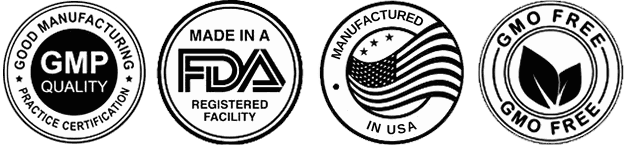
- “FDA-registered facility” means a factory filed paperwork with the FDA. It says nothing about any specific product made there.
- The FDA does not approve dietary supplements before they reach a shelf — a 2015 public-health review lays out exactly why.
- “GMP” refers to a set of manufacturing rules a facility is required to follow, not a certificate issued after independent testing.
- A 2024 JAMA Network Open study tested 30 weight-loss supplements and found 25 had inaccurate labels.
- None of this is specific to SlimSet — it is how the entire US dietary supplement category is regulated, and every buyer in it is entitled to know it.
What “registered” requires, in plain terms
Under US law, a facility that manufactures, processes, packs or holds food or dietary supplements for sale in the United States is required to register with the FDA. Registration is essentially an address on file: it tells the agency the facility exists and what it does, so inspectors know where to look. It does not involve the FDA reviewing, testing or approving any specific product that facility makes.
That distinction is the whole content of the roundel in this site’s own footer. “FDA-registered facility” is a true and legally meaningful statement about the building. It is not, and cannot honestly be read as, a statement about this bottle’s contents, potency or safety.
Why no supplement carries FDA approval
Dietary supplements in the United States are regulated under a framework, set out in the Dietary Supplement Health and Education Act of 1994, that treats them closer to foods than to drugs. A new drug generally cannot be sold until the FDA reviews clinical trial data and approves it. A dietary supplement generally can be sold without any pre-market FDA review at all — the manufacturer is responsible for ensuring it is safe and truthfully labeled, and the FDA’s main enforcement tool is acting after a product is already on shelves, if it turns out to be unsafe or falsely marketed.
A 2015 review in the American Journal of Public Health lays this structure out directly: the FDA regulates dietary supplement quality, safety and labeling, and the Federal Trade Commission separately monitors advertising, but the paper concludes that enforcement challenges remain substantial and that optimal government oversight of the category has not been achieved. Its closing point is blunt — if the composition and quality of a supplement's ingredients cannot be reliably assured before sale, the burden of proof effectively shifts to whoever is willing to test the finished product afterward.
This is not a criticism specific to any one brand. It is the legal shape of an entire product category, and it is the reason the FDA’s own consumer guidance states plainly that dietary supplements are not FDA-approved. The agency says so itself.
What GMP actually is
Good Manufacturing Practice, GMP, is a separate regulatory concept from registration. It refers to a body of federal rules covering how a supplement facility must operate: equipment cleaning, batch record-keeping, personnel training, testing procedures and the like. Facilities making dietary supplements for the US market are required to follow these rules, and the FDA can inspect a facility against them and issue findings if it does not comply.
What GMP is not is a third-party certificate awarded after a product is independently tested for potency or purity, the way, for example, an NSF or USP certification mark works. A GMP seal on packaging typically signals that the maker asserts its manufacturing process follows these federal rules — a meaningful operational standard, but a claim about the process, not an independent lab result on this specific bottle.
What a 2024 study found when it tested the category
The gap between what these labels are legally allowed to claim and what a chemical analysis of the actual contents shows is not theoretical. A 2024 study in JAMA Network Open purchased 30 weight-loss dietary supplements marketed online, specifically ones advertising military discounts, and tested them with liquid chromatography-mass spectrometry against their own printed Supplement Facts panels.
| Finding | Number of the 30 products tested |
|---|---|
| Label found inaccurate against the tested contents | 25 |
| Listed ingredients not actually detected (misbranded) | 24 |
| Hidden ingredients present but not listed on the label | 7 |
| Contained a substance on the DoD Prohibited Dietary Supplement Ingredients List | 10 |
All 30 products in this study were rated risky on the Operation Supplement Safety scorecard. This is a study of the weight-loss supplement category broadly, not a test of any specific brand, and SlimSet was not among the products it examined.
The point of citing this study here is not to imply anything about SlimSet’s own contents, which this article has no independent lab data on either way. It is to demonstrate concretely why “FDA-registered facility” and a GMP claim are not, on their own, a guarantee of label accuracy — a category-wide study just found that the large majority of tested products in this exact product type carried an inaccurate label, and every one of them was presumably made in a facility that could print the same two badges this site does.
It is also worth being precise about what this study does and does not establish. It sampled 30 products from 12 companies specifically advertising military discounts in June 2023, a marketing channel chosen for its relevance to the study’s sponsoring institution rather than a random sample of the entire US weight-loss supplement market. A different sampling frame could in principle produce a different accuracy rate. What the study does establish beyond reasonable doubt is that label inaccuracy in this category is common enough, in at least one well-defined slice of it, that “registered facility” and “GMP” cannot be read as a proxy for accuracy without independent testing to back them up.
Read the panel, and read this footer the same way
Five actives, a milligram figure against every one, 658 mg declared in total. One capsule a day, 30 to a bottle, with 60 days from purchase to change your mind.
One bottle $89 · six bottles $294 · 60-day money-back guarantee
Order SlimSet On The Official WebsiteOne capsule a day · 30 per bottle · lot SLI-26/GE-8193
Why the law is built this way
It is worth understanding the reasoning, because it explains why registration and GMP badges exist at all rather than being simply absent. Supplements are legally food-adjacent products taken by healthy adults, generally at lower risk than a prescription drug intervening in an existing disease process, and requiring full pre-market drug-style review for every new formulation would be an enormous regulatory undertaking for a category that includes plain vitamin C tablets alongside more complex botanical blends.
The trade-off Congress made in 1994 was to lower the pre-market bar substantially in exchange for placing more responsibility on manufacturers to ensure safety and label accuracy themselves, with FDA authority concentrated on facility standards, post-market enforcement and stopping specific unsafe products once identified. Reasonable people disagree about whether that trade-off is set in the right place — the 2015 review cited above argues it is not — but understanding the trade-off is what turns a footer badge from a mystery into a fact you can weigh correctly.
How to check a facility registration claim yourself
Because “FDA-registered” is a specific, checkable legal status rather than a vague marketing phrase, it is one of the few supplement claims a buyer can verify independently rather than taking on trust. Food facility registration is handled through the FDA’s Food Facility Registration system, and the registration itself is a matter of public regulatory record in the sense that the requirement, the categories it covers and the enforcement consequences for non-compliance are all published on the agency’s own site, linked above.
What a buyer cannot easily do is look up a specific company's registration number and cross-check it against a specific bottle, because the registration is tied to the facility rather than stamped onto individual product packaging the way, for example, a drug's National Drug Code number is. This is itself informative: the absence of an easily checkable per-product reference number is part of why the category study below matters more than the badge does.
A GMP claim is harder still to verify independently, precisely because it is usually a manufacturer's own assertion rather than a number tied to a public database. The strongest independent signal available to an ordinary buyer, when it exists, is a certificate of analysis from a named third-party laboratory for a specific batch — a different, more specific document than either badge discussed here, and one worth asking for directly if a purchase decision depends on it.
Reading a badge like this one, from here on
None of this is a reason to distrust every supplement label reflexively. It is a reason to read “FDA-registered facility” and “GMP” as statements about a building and a process, and to keep “approved,” “tested” and “certified” as three separate, stronger words that require their own separate evidence — ideally a named third-party lab and a certificate of analysis, which is a different, verifiable thing from a manufacturing-practice seal.
It is worth adding what this article is not arguing. It is not arguing that registration and GMP compliance are meaningless — a facility that is not registered, or that ignores manufacturing rules entirely, is a worse sign than one that meets both. It is arguing that these two marks sit at the floor of what US law requires for a legally sold supplement, not at the ceiling of what a careful buyer could ask for, and reading them as more than that floor is where a badge stops informing and starts reassuring past what it has actually earned.
- “FDA-registered facility” — the building filed paperwork. Says nothing about this specific product.
- “GMP” — the maker asserts it follows federal manufacturing rules. Not an independent test result.
- “FDA-approved” — a claim no dietary supplement in the United States can truthfully make, and this site does not make it.
- A certificate of analysis from a named third-party lab — the strongest of the four, and the one worth asking a seller for directly if it matters to you.
The testing & quality page on this site sets out, mark by mark, what each footer badge here is and is not asserting, in the same spirit as this article.
A dietary supplement for healthy adults 18 and over, not a medicine and not FDA-approved. This article describes how the category is regulated in general and cites a study of the weight-loss supplement category broadly; it makes no claim, positive or negative, about independent lab testing of this specific product that this website has not itself performed or verified.
Related reading: the retracted trial behind green coffee bean is a case study in a different kind of claim going further than its evidence, and what a label percentage means covers how to read the ingredient standardisations on this panel correctly.
References
- Starr RR. Too little, too late: ineffective regulation of dietary supplements in the United States. Am J Public Health. 2015;105(3):478-485. PMID 25602879. https://pubmed.ncbi.nlm.nih.gov/25602879/
- Crawford C, Avula B, Lindsey AT, Katragunta K, Khan IA, Deuster PA. Label Accuracy of Weight Loss Dietary Supplements Marketed Online With Military Discounts. JAMA Netw Open. 2024;7(5):e249131. PMID 38691359. https://pubmed.ncbi.nlm.nih.gov/38691359/
- U.S. Food and Drug Administration. Questions and Answers on Dietary Supplements. fda.gov